Tankless Water Heater Freeze Protection in Texas
The February 2021 freeze cracked tankless units across the Houston area. This guide explains what protects a unit, what to do before and during a hard cold snap, and what to check after one.
Sugar Land Tankless Pros · 2026-11-17 · Safety Guide
The short version
Problem: The 2021 freeze cracked heat exchangers, water lines and condensate drains across the Houston area — a unit cracked then can leak now.
What to do: The internal heater, the drain-down steps, and the insulation on the water lines are the three protections, checked every autumn.
When to call: During a hard cold snap, keep the unit powered, keep a tap trickling, and drain the unit if the power goes out.
The 2021 freeze, and what it taught
The February 2021 freeze — Winter Storm Uri — cracked tankless units across the Houston area. Heat exchangers split, water lines burst, condensate drains froze solid, and units that had served for years failed in a single week. The lesson was not that Texas cannot freeze; it was that a tankless unit on an outside wall, a balcony, a roof or in an unheated space is exposed in a way an indoor unit is not, and the protection it needs is specific.
The second lesson was slower. A unit cracked in that cold snap can leak months or years later, when the weakened metal finally gives way, or when the next cold snap finishes the job. A leak that appears long after a freeze, with no other cause, is checked for freeze damage first — because the crack is rarely the only weak point the cold left behind.
The third lesson was about the record. A unit whose freeze protection was checked in autumn, whose water lines were insulated, and whose drain-down steps were known, survived. A unit whose protection was never checked did not. The autumn check is the protection, and it costs a visit.
What protects a unit
The internal heater is the first protection. Most tankless units carry an internal electric heater that warms the heat exchanger and the internal waterways when the temperature drops, and it works only while the unit has power. A unit that loses power in a freeze loses its first protection with it — which is why the power question is asked first, and why a unit should never be unplugged before a cold snap.
The drain-down steps are the second protection. A unit that can be drained — the isolation valves closed, the drain valves opened, the water out of the unit — cannot crack, because there is no water in it to freeze. The drain-down is the answer where the power is out, or where the unit will be unused through a cold snap. The steps are published in most unit maker manuals, and the visit shows them once so the household knows them.
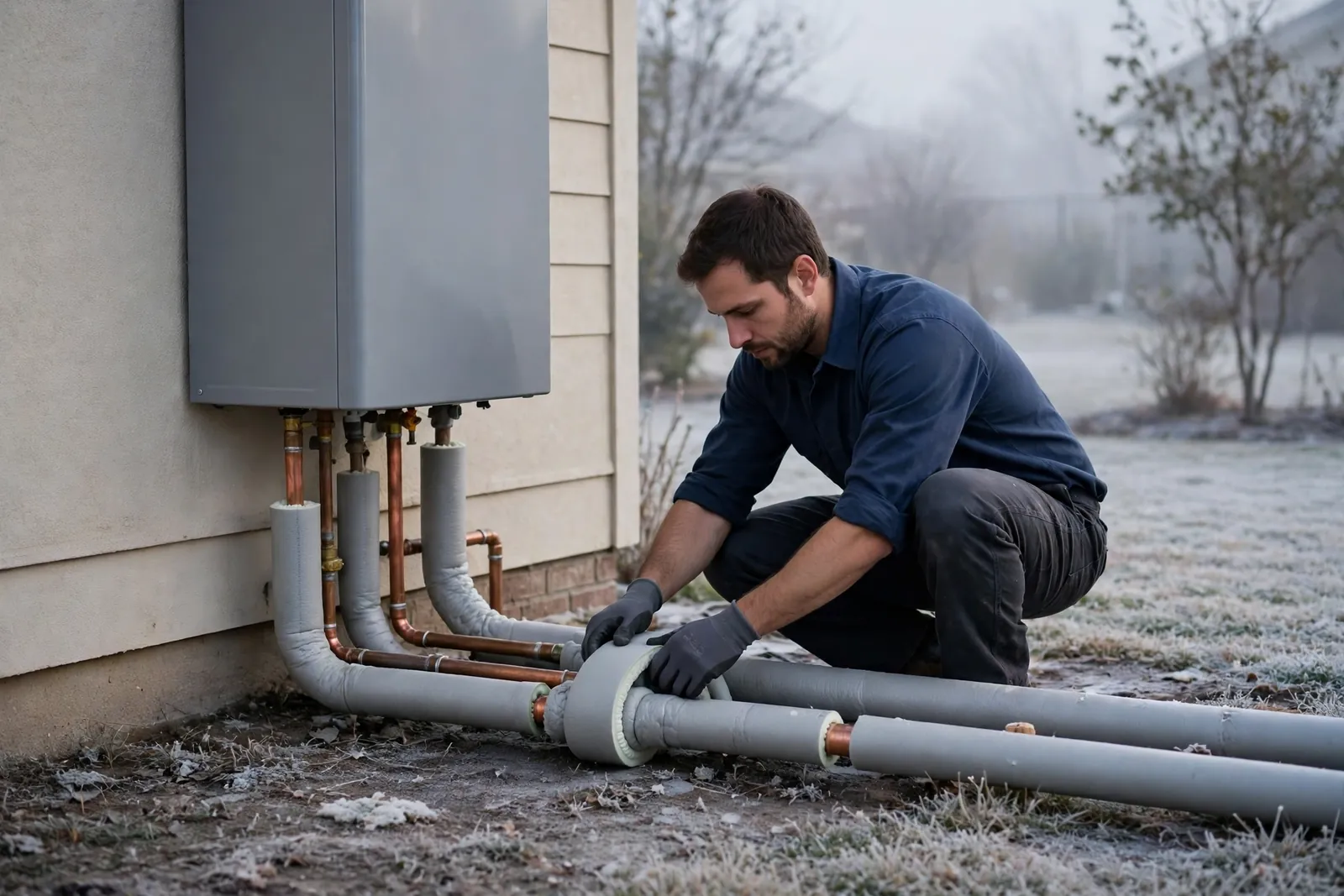
The insulation on the water lines is the third protection. The cold-water inlet, the hot-water outlet, the condensate drain and any exposed pipe are insulated, so the water in them stays above freezing longer. The insulation is checked every autumn, because it degrades, slips, and is sometimes removed during other work and never replaced.
Before a cold snap
Check the power. The unit should have power, and the breaker should be on, because the internal heater needs it. Check the insulation on the water lines, and replace any that has slipped or degraded. Check the condensate drain for a clear, freeze-proof route — a drain that freezes is a unit that leaks.
Know the drain-down steps. The isolation valves, the drain valves, the order they are used in — know them before the cold snap, not during it. The visit shows them once, and the household writes them down. A household that knows the steps can drain the unit in minutes if the power goes out.
Check the unit itself. A unit that is already leaking, or already showing error codes, is a unit that will not survive a hard cold snap well. The autumn visit is the moment to find it, because the visit that happens after the freeze is a repair, not a check.
During a hard cold snap
Keep the unit powered, and keep a tap trickling. A trickle keeps water moving through the unit and the lines, and moving water freezes far more slowly than standing water. The trickle is the oldest freeze protection there is, and it works — a small, steady flow, at the tap farthest from the unit.
If the power goes out, drain the unit. Close the isolation valves, open the drain valves, and let the water out. A unit with no water in it cannot crack, and the drain-down is the protection when the internal heater has no power. Do not wait for the power to return — the cold does not wait.
Do not open the unit casing, and do not try to thaw a frozen unit with a torch or an open flame. A frozen unit is thawed slowly, with the power off and the water off, and the thaw is followed by an inspection — because a unit that froze may have cracked, and the crack shows only when the water is turned back on.
After a cold snap
Check the unit before you use it. Look for water under the unit, damp on the wall behind it, or a wet patch on the floor. Check the display for an error code. Open a tap and watch the flow and the temperature. A unit that leaks, shows a code, or will not heat after a freeze is checked for freeze damage first.
The freeze check runs in order: the heat exchanger, the water lines, and the condensate drain. The heat exchanger is checked for cracks, the lines for splits, the drain for a freeze that has blocked it. A connection leak after a freeze is a repair. A heat exchanger leak after a freeze is usually a replacement, because the crack is rarely the only weak point the cold left behind.
The autumn check follows the cold snap. The insulation is replaced where it slipped, the drain-down steps are reviewed, and the internal heater is tested. The next cold snap finds a unit that is ready — and the record shows what was done.
If the power goes out
If the power goes out during a hard cold snap, the internal heater has no power — and the drain-down is the protection that is left. Close the isolation valves, open the drain valves, and let the water out of the unit. A unit with no water in it cannot crack, and the drain-down is the answer when the power is out, or when the unit will be unused through a cold snap.
The drain-down steps are published in most unit maker manuals, and the visit shows them once so the household knows them. The isolation valves, the drain valves, the order they are used in — know them before the cold snap, not during it. A household that knows the steps can drain the unit in minutes, and the minutes matter when the cold is already in the house.
Do not wait for the power to return. The cold does not wait, and a unit that is left full of water through a hard freeze is a unit that cracks. Drain the unit, and check it before you use it again: look for water under the unit, check the display for an error code, and open a tap to watch the flow and the temperature. A unit that leaks, shows a code, or will not heat after a freeze is checked for freeze damage first.
Related: leaking unit problem · tankless water heater maintenance · tankless water heater help in Sugar Land
Related guides
 Maintenance Guide
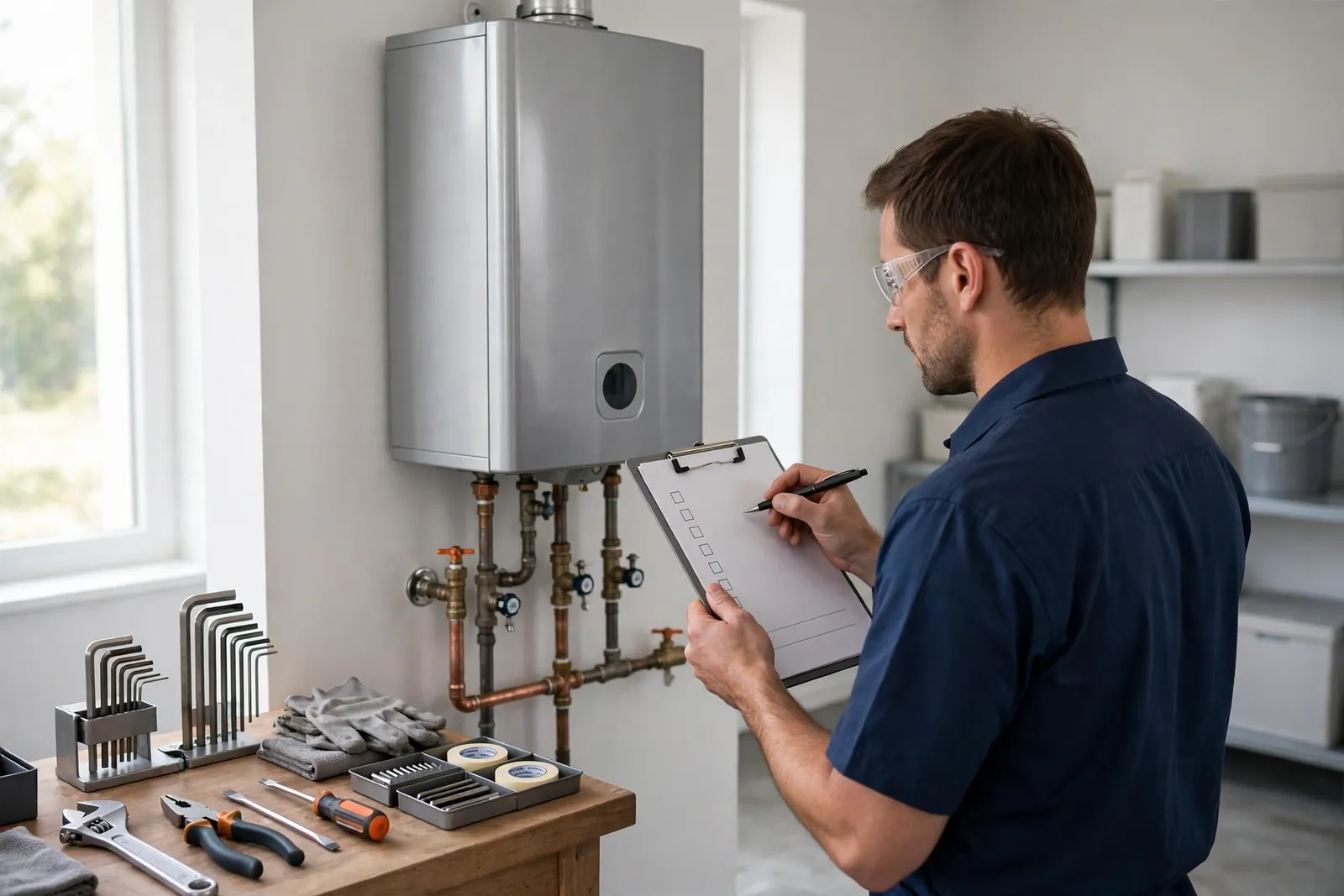
Tankless Water Heater Maintenance Checklist in Sugar Land, TX
The yearly routine, the autumn freeze check, and what to watch between visits. This checklist covers the descaling, the filter, the burner, the venting, and the record — everything a Sugar Land unit needs in a year.
 Lifespan Guide
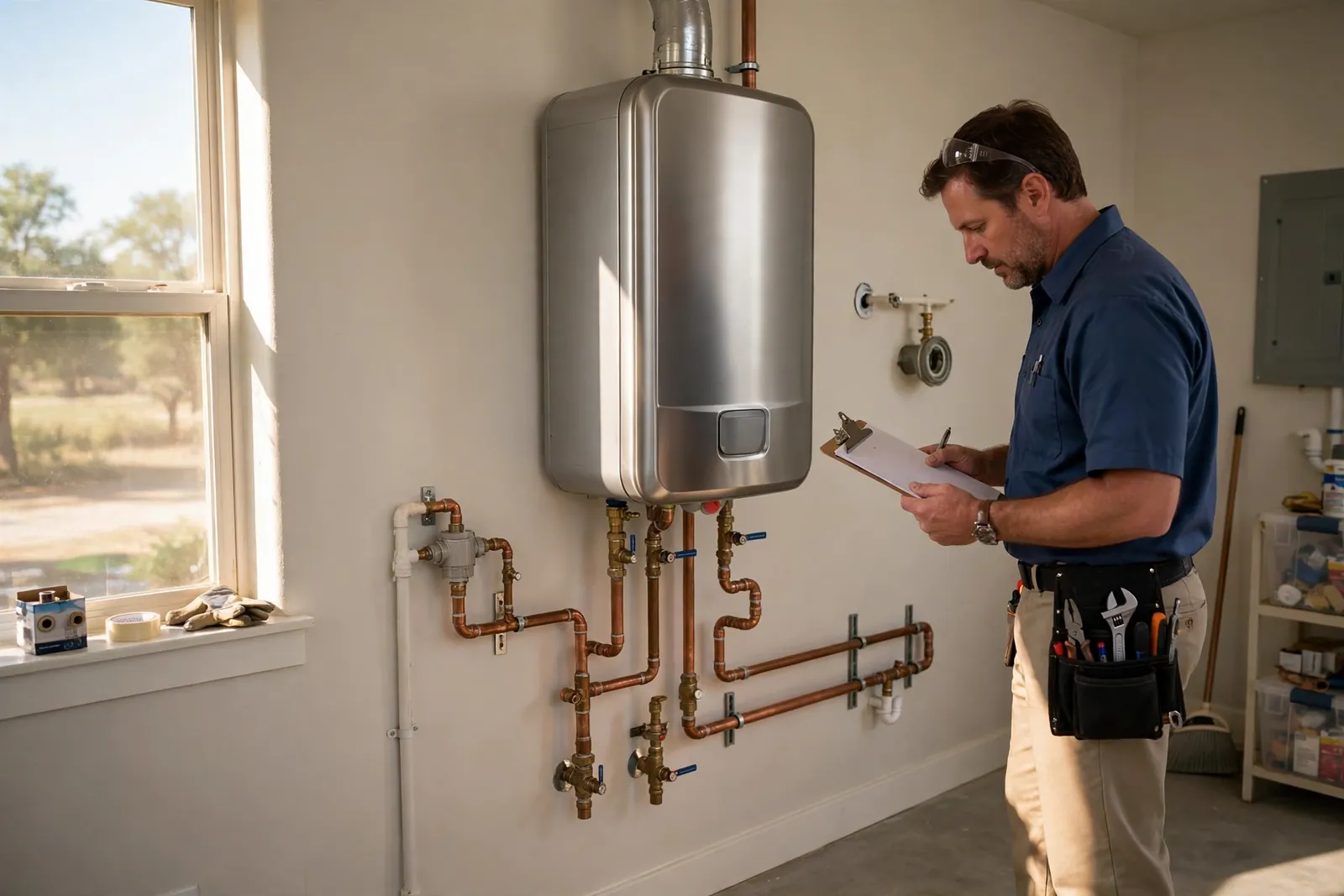
How Long Do Tankless Water Heaters Last in Sugar Land, TX?
A tankless water heater that is descaled on schedule can serve a Sugar Land home for two decades. The lifespan is set by the water, the maintenance, and the parts — and the hard water here is the deciding factor.
 Repair Guide
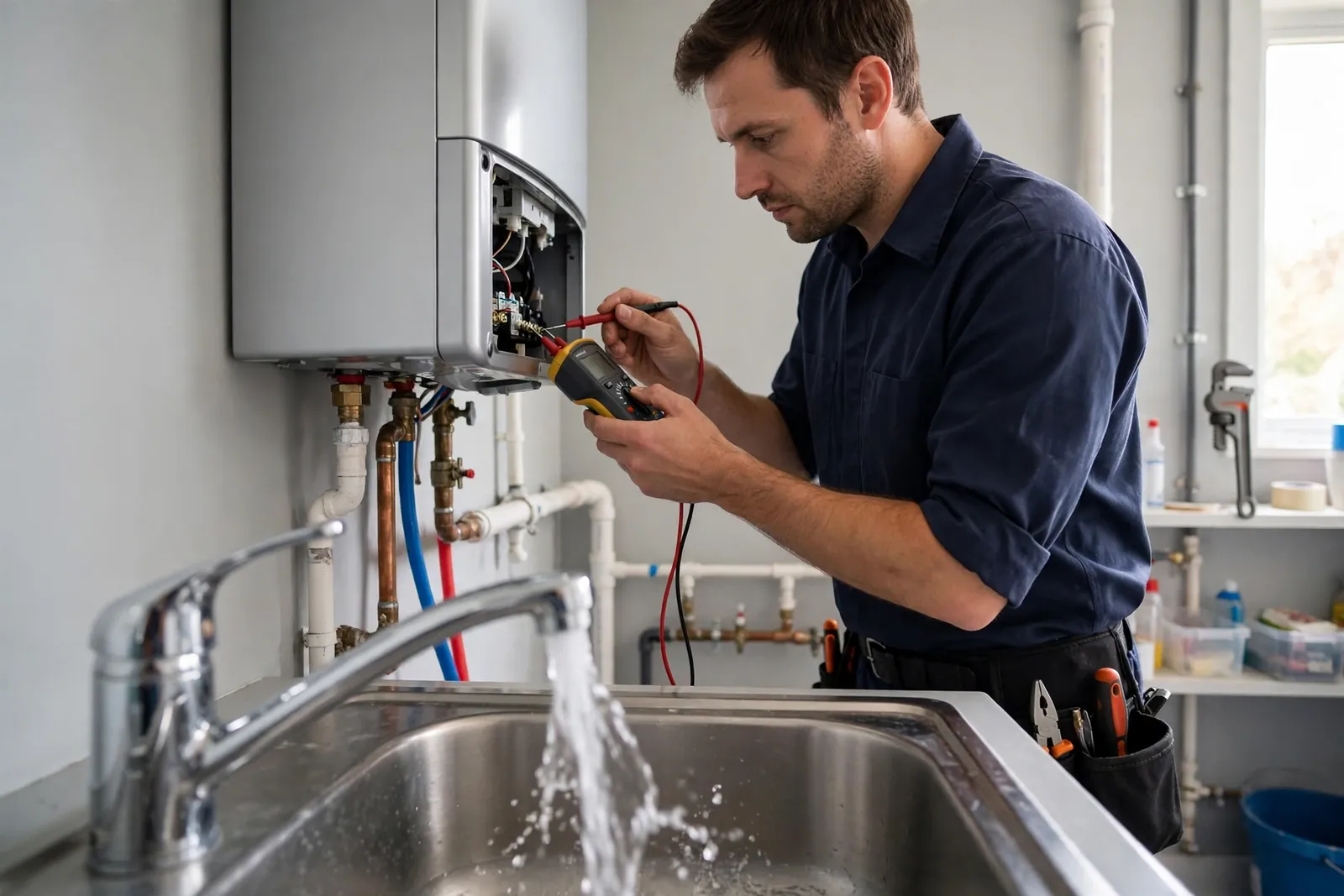
Why Is My Tankless Water Heater Not Heating in Sugar Land, TX?
A tankless unit that will not heat is a diagnosis job, and the diagnosis runs in order: display, flow, supply, filter, scale, and then the parts. This guide walks the order, and the causes behind each step.
Frequently asked questions
Questions people ask about this topic, answered plainly.
Keep the unit powered so its internal heater works, insulate the water lines and the condensate drain, and know the drain-down steps for a power cut. The internal heater, the drain-down, and the insulation are the three protections, checked every autumn.
The February 2021 freeze cracked heat exchangers, water lines and condensate drains across the Houston area. A unit cracked then can leak months or years later, when the weakened metal finally gives way.
Yes, where the power is out or the unit will be unused through a cold snap. Close the isolation valves, open the drain valves, and let the water out. A unit with no water in it cannot crack.
Yes. A trickle keeps water moving through the unit and the lines, and moving water freezes far more slowly than standing water. Keep a small, steady flow at the tap farthest from the unit.
Look for water under the unit, damp on the wall behind it, or a wet patch on the floor. Check the display for an error code. Open a tap and watch the flow and the temperature. A unit that leaks, shows a code, or will not heat after a freeze is checked for freeze damage first.
It depends on what cracked. A connection or a water line is a repair. A heat exchanger leak after a freeze is usually a replacement, because the crack is rarely the only weak point the cold left behind.
No. The internal heater needs power, and a unit that loses power in a freeze loses its first protection with it. Keep the unit powered, and drain it only if the power goes out.
Every autumn, before winter. The internal heater is tested, the insulation on the water lines is checked, the condensate drain is checked for a freeze-proof route, and the drain-down steps are reviewed.
Still have questions?
Call Now to reach a local tankless water heater professional — describe the water and the rooms it reached.
Call now for tankless water heater help
Tap Call Now to reach a local tankless water heater professional. Tell them the make of the unit if you know it, the symptoms, and any error code on the display.
Hours: Mon–Fri 7:00 AM–10:00 PM ET · Sat 8:00 AM–10:00 PM ET · Sun 7:00 AM–9:00 PM ET
Before you call
- Note the error code on the display, if one shows.
- Check whether other taps have hot water, and whether cold water runs normally.
- If the unit is leaking, shut off its water and gas or power where it is safe to do so.
- Take a photo of the display and the label on the unit.
- Note when the problem started and what changed just before it.