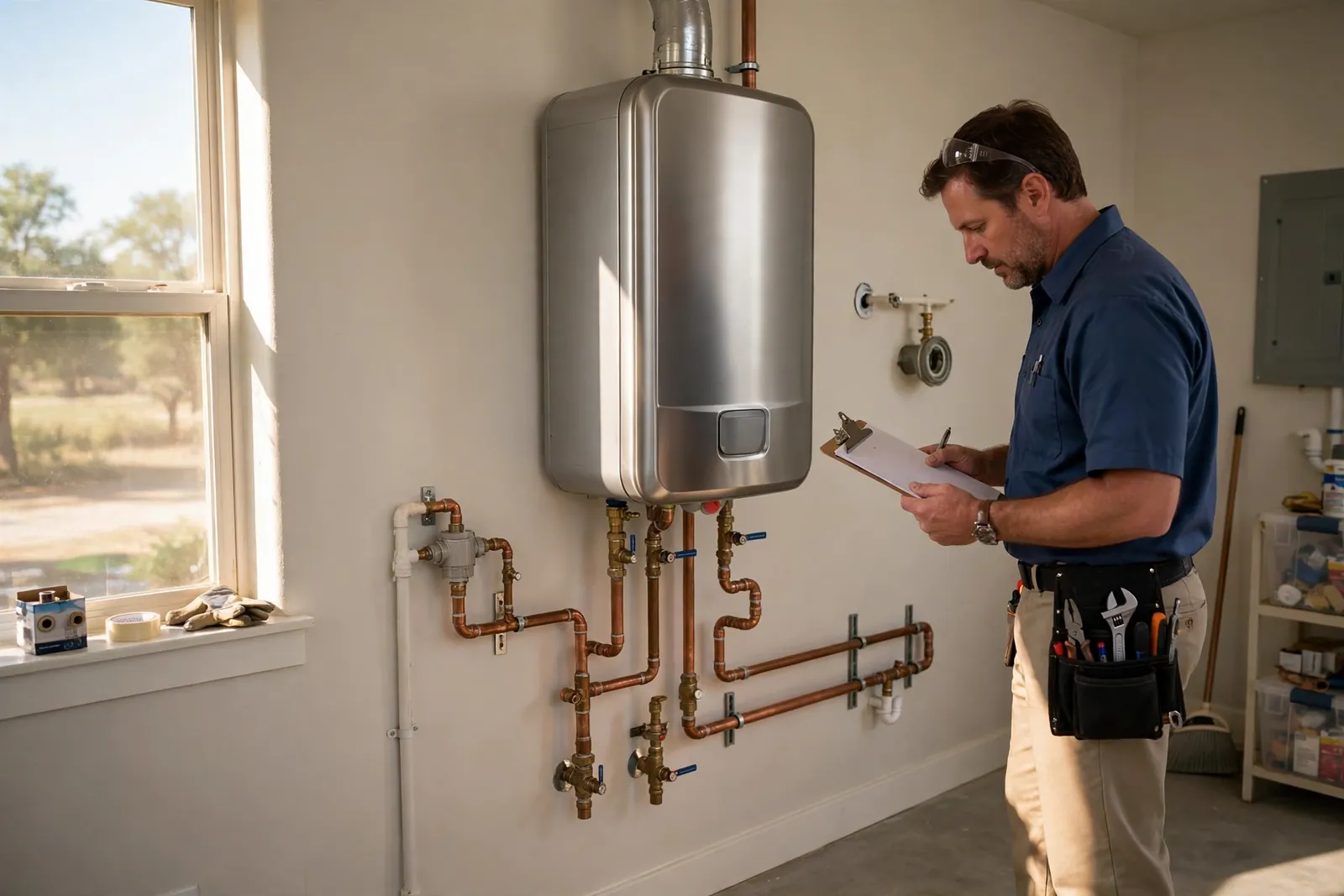
How Long Do Tankless Water Heaters Last in Sugar Land, TX?
A tankless water heater that is descaled on schedule can serve a Sugar Land home for two decades. The lifespan is set by the water, the maintenance, and the parts — and the hard water here is the deciding factor.
Sugar Land Tankless Pros · 2026-11-17 · Lifespan Guide
The short version
Problem: A tankless unit that is descaled on schedule commonly serves a home for about two decades.
What to do: Hard water is the deciding factor in Sugar Land: scale shortens the life of a unit that is never flushed.
When to call: A leaking heat exchanger, or a unit so scaled that flushing no longer restores its heating, means the end of its serviceable life.
The lifespan in plain terms
A tankless water heater that is descaled on schedule commonly serves a home for about two decades. That is roughly twice the service life of a tank unit, and it is the reason the technology is sold on longevity as well as on endless hot water. The number is not a promise — it is the outcome of a unit that is maintained, in water that is managed, in a home where the unit is sized correctly.
The lifespan is set by three things: the water, the maintenance, and the parts. The water decides how fast scale builds. The maintenance decides whether the scale is removed before it does damage. The parts decide what fails first when the unit ages — and in a well-maintained unit, the parts that fail first are the cheap ones: sensors, igniters, elements, valves.
Sugar Land water is the deciding factor in practice. Houston-area water is hard — about 8 grains per gallon in the City of Houston 2025 water quality report, a level the USGS classifies as hard — and a unit that fires in hard water every day lays down scale a little more with every firing. A unit descaled once a year lives in a different world from a unit descaled never.
What shortens a tankless life
Scale is the first and largest life-shortener. Mineral scale coats the heat exchanger, insulates it from the water, and makes the metal underneath run hotter than it was made to. Over years, the overheated metal fatigues, the passages narrow, and the unit trips its overheat protection more and more often. A unit that is never descaled in hard water can lose years of its service life to scale alone.
Freeze damage is the second life-shortener, and it is the local one. The February 2021 freeze cracked heat exchangers, water lines and condensate drains across the Houston area, and a unit cracked then can fail months or years later, when the weakened metal finally gives way. A unit that survived the freeze with no damage is fine; a unit that was cracked and never inspected carries the damage forward.
Undersizing is the third life-shortener, and it is the quietest. A unit sized for one shower at a time, serving a household that runs two showers and a washing machine together, fires at its maximum all day. The parts wear faster, the heat exchanger runs hotter, and the unit ages at a pace a correctly sized unit never reaches. Sizing is a lifespan decision, not only a comfort decision.
Neglected maintenance is the fourth, and it is the one that combines the other three: a unit that is never descaled, never inspected, and never checked for freeze protection is a unit whose faults are found late, when they have already done damage.
What extends a tankless life
The yearly descale and flush is the single most effective life-extender, and it is the one the water demands. A flush about once a year in Sugar Land water dissolves the scale before it hardens into a layer that insulates the heat exchanger, and the flow and temperature are checked afterwards to prove the improvement. Homes with a water softener can stretch the interval; homes without one should not.
The inlet filter is the second life-extender, and it is cleaned at the same visit. The screen catches grit and scale flakes before they reach the inside of the unit, and a clogged screen starves the unit of water — which makes it cycle, overheat, and wear faster. A clean filter is a unit that breathes properly.
The autumn freeze check is the third, and it is the local one. The internal heater, the drain-down steps, and the insulation on the water lines are checked before winter, so the next hard cold snap finds a unit that is ready. A unit that is protected in autumn does not crack in January.
The record is the fourth. A maintenance record — what was done, when, and what was found — is what the maker care guidance asks for, and it is what the next visit builds on. A unit with a record is a unit whose history is known, and whose faults are caught early.
The signs a unit is near the end
A leaking heat exchanger is the clearest end-of-life sign. The heat exchanger is the most expensive part of the unit, and a leak there usually means the unit has reached the end of its serviceable life. Fitting a new heat exchanger into an old unit leaves every other worn part in place, and the next failure is usually close behind.
A unit so scaled that flushing no longer restores its heating is the second sign. The scale layer has hardened into a coating the flush cannot dissolve, and the unit cannot transfer heat properly no matter what is done to it. The flow and temperature readings prove it, and the recommendation follows from the readings.
Repeated major part failures are the third sign. A unit well past a decade, never flushed, that now needs a control board — and then a sensor, and then a valve — is a unit whose parts are failing together, because they have aged together. The repair cost, added up across the failures, exceeds the value of the remaining life.
Age alone is not a sign. A unit that is fifteen years old, descaled every year, with a clean record and no leaks, is a unit with years left in it. The diagnosis decides, and the recommendation follows from what it finds — not from the label alone.
Repair or replace at the end of life
The repair-or-replace decision at the end of life turns on three things: what failed, how old the unit is, and what the heat exchanger looks like. A failed sensor, igniter, element or valve is a repair in almost every case. A leaking heat exchanger is the opposite: it is the most expensive part of the unit, and a leak there usually means replacement.
A replacement is also the chance to fix the sizing. An undersized unit, a gas line that starves the burner at peak, a vent route that was never right — all of these can be corrected at replacement time, and none of them can be corrected by a repair. A replacement that fixes the sizing ends the lukewarm showers and starts a new lifespan with a clean record.
The record carries over. The new unit starts with a descaling schedule, a maintenance record, and a freeze check in autumn — and the household that keeps that record is the household whose unit lasts.
What to do with an ageing unit
Note the age of the unit from the label, and the descaling history — if anyone knows it. Note the symptoms: lukewarm water, slow flow, error codes, or a leak. Note whether the symptoms are getting worse over months, or whether they started suddenly. Those notes, and the label, are what the visit needs.
Do not wait for the leak. A unit that is declining is a unit that can be planned for, and a planned replacement happens on the household schedule — not at midnight, not during a freeze, not with water on the floor. Call while the unit still works, and the replacement is a choice.
Related: lukewarm water problem · tankless water heater replacement · tankless water heater help in Sugar Land
Related guides
 Maintenance Guide
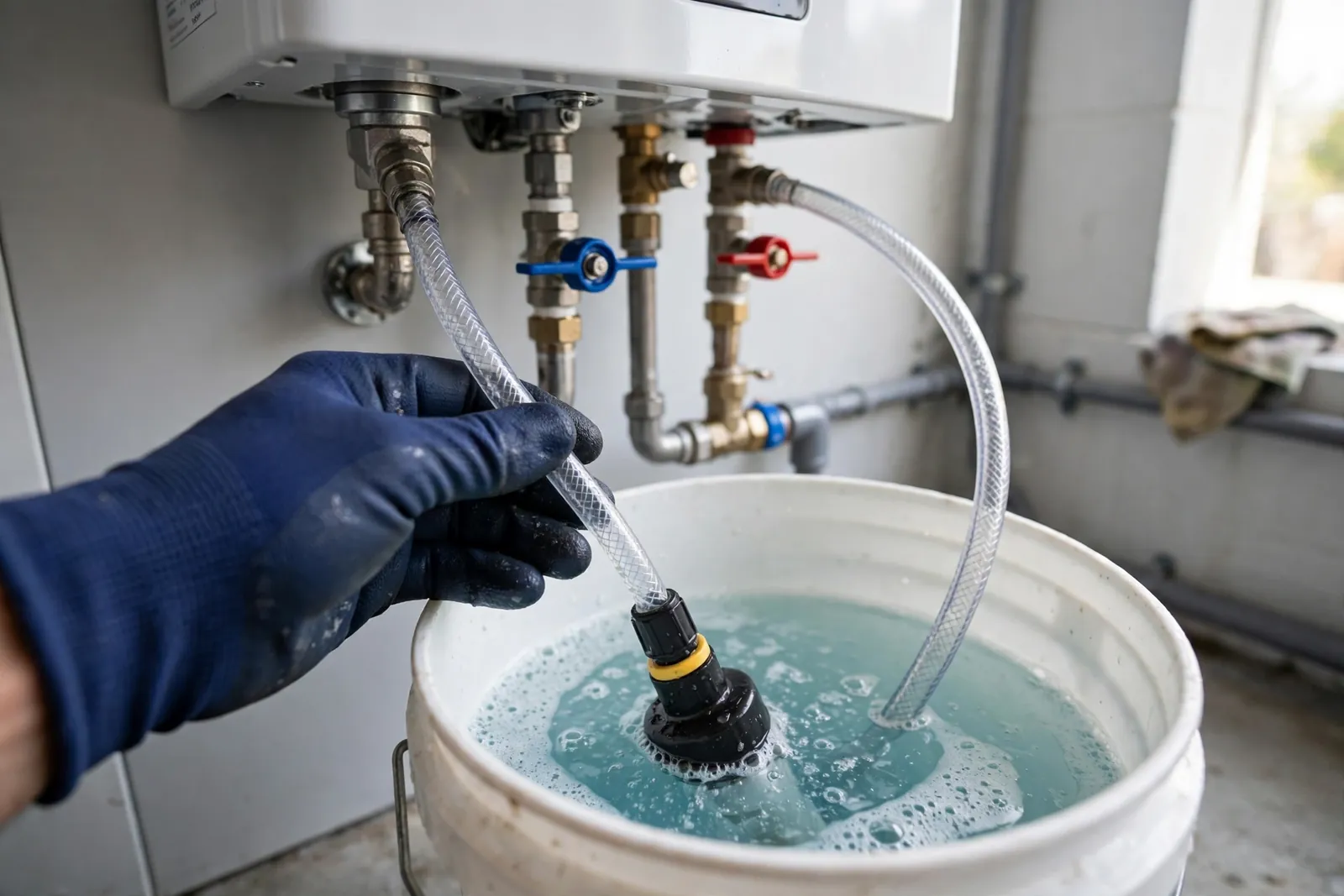
How Often Should a Tankless Water Heater Be Flushed in Sugar Land, TX?
About once a year, in Sugar Land water. Houston-area water is hard, and the mineral load coats the heat exchanger a little more every time the unit fires. This guide explains the routine, the signs a flush is due, and what the visit covers.
 Maintenance Guide
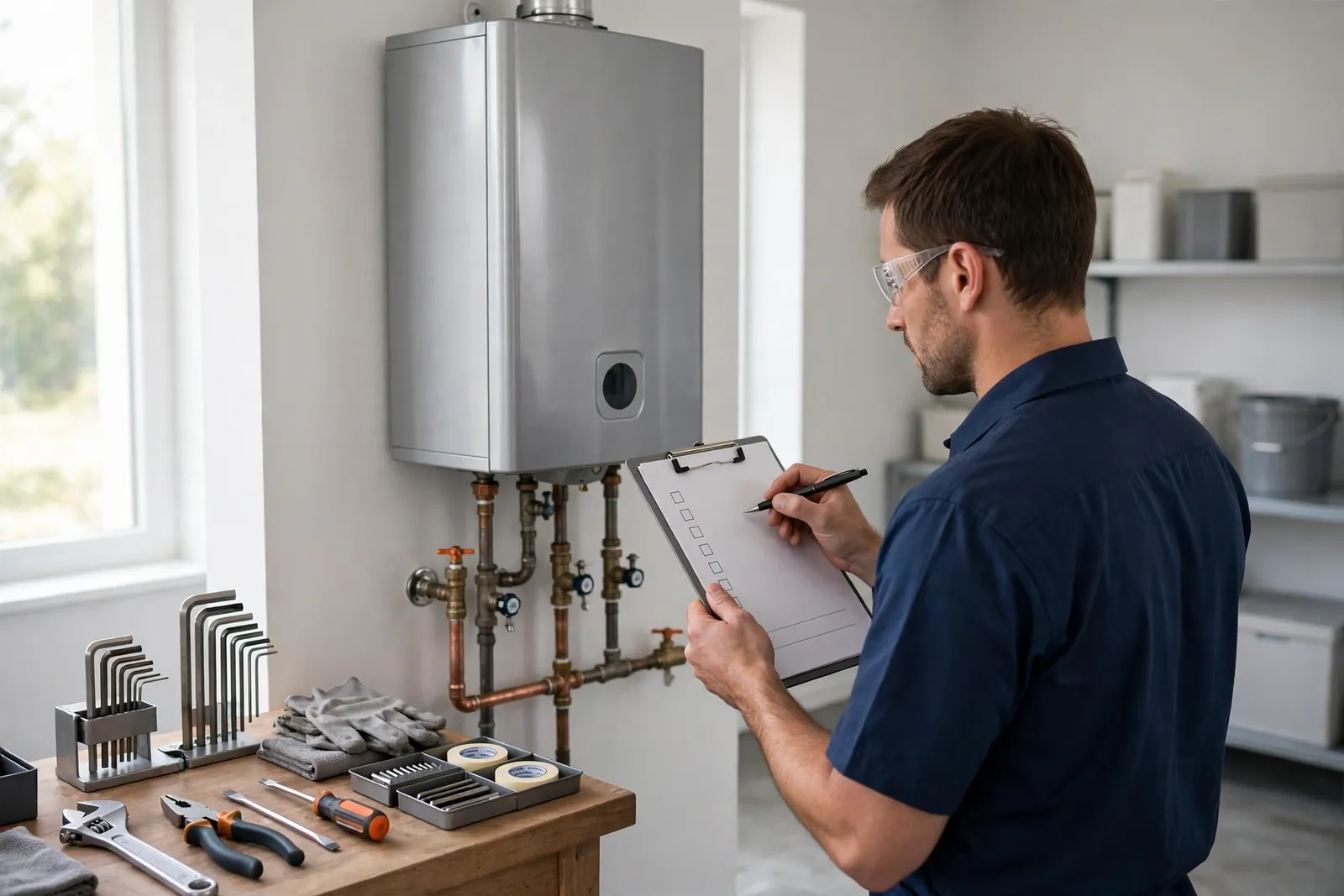
Tankless Water Heater Maintenance Checklist in Sugar Land, TX
The yearly routine, the autumn freeze check, and what to watch between visits. This checklist covers the descaling, the filter, the burner, the venting, and the record — everything a Sugar Land unit needs in a year.
 Comparison Guide
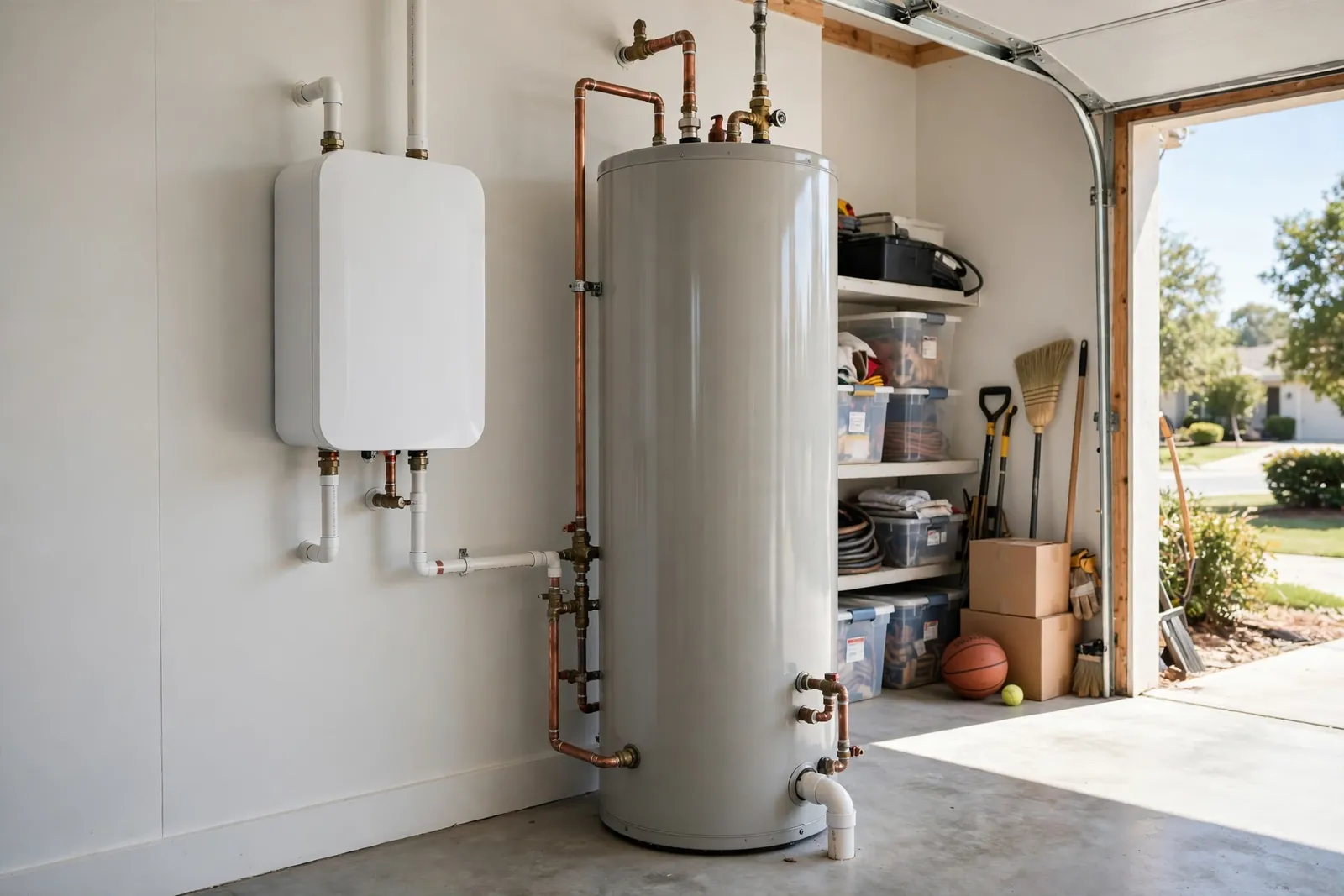
Tankless vs Tank Water Heater in Sugar Land, TX
A tankless unit heats water as it flows; a tank unit keeps a store of hot water ready. The choice turns on the household peak, the hard water here, and how much the family values endless hot water against a simpler unit.
Frequently asked questions
Questions people ask about this topic, answered plainly.
A tankless unit that is descaled on schedule commonly serves a home for about two decades. The lifespan is set by the water, the maintenance, and the parts — and hard water is the deciding factor in Sugar Land.
Yes. Mineral scale coats the heat exchanger, insulates it from the water, and makes the metal underneath run hotter than it was made to. A unit that is never descaled in hard water can lose years of its service life to scale alone.
The symptoms arrive in order: a shower a little less hot than it was, a tap that takes longer to warm up, temperature swings during a shower, then flow dropping and error codes on cold mornings. By the time flow has dropped noticeably, the scale layer is thick enough to matter.
Usually, yes. The heat exchanger is the most expensive part of the unit, and a leak there usually means the unit has reached the end of its serviceable life. Fitting a new one into an old unit leaves every other worn part in place.
Yes — a unit that is descaled every year, with a clean record and no leaks, can serve well past that. Age alone is not a sign. The diagnosis decides, and the recommendation follows from what it finds.
It can. A unit cracked in that cold snap can fail months or years later, when the weakened metal finally gives way. A unit that survived the freeze with no damage is fine; a unit that was cracked and never inspected carries the damage forward.
It is worth considering where the unit is declining — lukewarm water, slow flow, repeated error codes — and the diagnosis shows a heat exchanger that flushing no longer restores. A planned replacement happens on the household schedule, not at midnight with water on the floor.
The yearly descale and flush, the inlet-filter clean at the same visit, and the autumn freeze check. Those three, kept on schedule, are what a long-lived unit has in common.
Still have questions?
Call Now to reach a local tankless water heater professional — describe the water and the rooms it reached.
Call now for tankless water heater help
Tap Call Now to reach a local tankless water heater professional. Tell them the make of the unit if you know it, the symptoms, and any error code on the display.
Hours: Mon–Fri 7:00 AM–10:00 PM ET · Sat 8:00 AM–10:00 PM ET · Sun 7:00 AM–9:00 PM ET
Before you call
- Note the error code on the display, if one shows.
- Check whether other taps have hot water, and whether cold water runs normally.
- If the unit is leaking, shut off its water and gas or power where it is safe to do so.
- Take a photo of the display and the label on the unit.
- Note when the problem started and what changed just before it.