Gas Tankless Water Heater Repair in Sugar Land, TX
A gas tankless unit heats water with a burner, so its faults are ignition, gas supply, venting and combustion air. The diagnosis checks the fuel and the flame before it checks the parts.
Need help with your tankless water heater?
Call Now to reach a local tankless water heater professional. Describe the unit, the symptoms, and any error code on the display.
Hours: Mon–Fri 7:00 AM–10:00 PM ET · Sat 8:00 AM–10:00 PM ET · Sun 7:00 AM–9:00 PM ET
What this service does
A gas tankless water heater is a burner, a heat exchanger, and a set of sensors that watch both. When a hot tap opens, the flow sensor tells the unit water is moving, the gas valve opens, the igniter lights the burner, and the flame sensor confirms the flame is there. Cold water passes through the heat exchanger and leaves hot. Close the tap and the burner stops. Every gas fault is a break somewhere in that chain — no gas, no spark, no flame, no air, or no way for the exhaust to leave.
Ignition failure is the most common gas fault, and it has the clearest symptom: the unit tries to light, clicks or sparks, and gives up, usually with an error code. The causes run in order: no gas reaching the unit, a gas valve that is closed or faulty, an igniter that has worn out, a flame sensor fouled with soot, or a control board that is not sending the signal. The diagnosis checks them in that order, because the simplest cause is also the most common — a valve closed during other work, or a gas supply interrupted upstream.
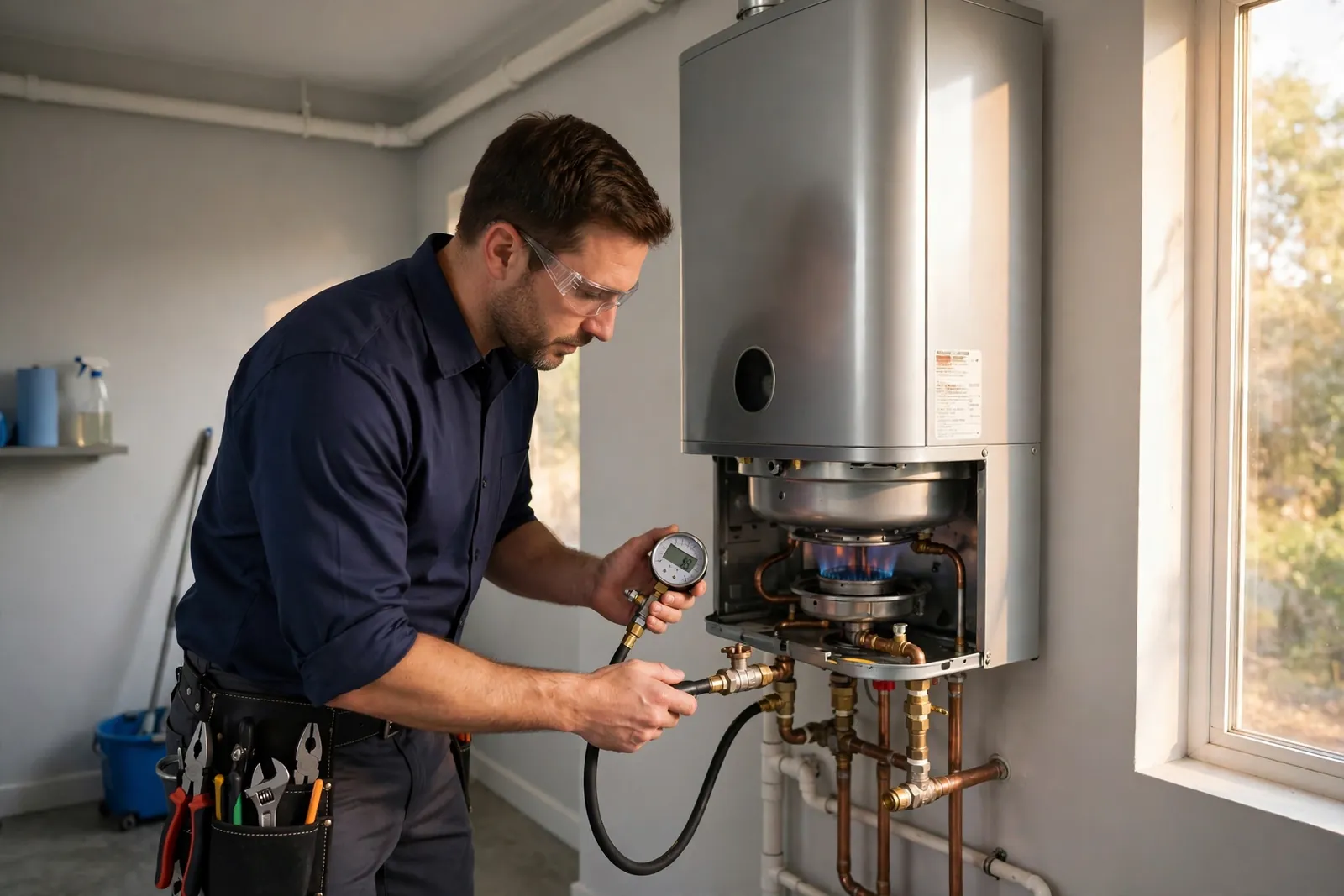
Gas supply is the fault that looks like a broken unit and is not. A gas tankless unit burns far more gas at full fire than a tank unit does, and a gas line sized for a tank unit starves a tankless burner exactly when demand peaks. The unit lights, the flame falters as other gas appliances draw, and the water never reaches temperature. The symptom — lukewarm water when two taps run — is often blamed on the unit, when the pipe is the problem. Gas pressure is measured at the unit to settle it, because a pressure reading ends the argument.
Venting is the third gas fault, and it is the one with safety behind it. A gas unit must carry its exhaust outside through a flue or a direct-vent pipe, and it must draw combustion air from somewhere. A vent that is blocked, corroded or wrongly sized trips the safety sensors and shuts the unit down. A condensing unit vents through plastic pipe and makes acidic condensate that drains away; a non-condensing unit vents hot exhaust through metal. The venting rules are different for each, and they follow the unit maker instructions and local code.
Combustion air is the fault households never think of, and it shows up in the same houses as the venting fault: units installed in tight closets, garages packed with storage, or utility rooms where the air intake has been blocked by boxes. A burner starved of air burns dirty, fouls the flame sensor, and trips the safety shutoff. The fix is often as simple as clearing the intake and the space around the unit — and the visit checks it before any part is ordered.
Before you call
- Note the error code on the display, if one shows.
- Check whether other taps have hot water, and whether cold water runs normally.
- If the unit is leaking, shut off its water and gas or power where it is safe to do so.
- Take a photo of the display and the label on the unit.
- Note when the problem started and what changed just before it.
How a gas tankless unit works — fuel, flame, exhaust
A gas tankless unit turns gas into hot water in four steps. The flow sensor detects water moving. The gas valve opens and the igniter sparks. The burner lights and the flame sensor confirms the flame. The heat exchanger carries the heat into the water. Each step has a sensor watching it, and each sensor can shut the unit down: the flow sensor if the flow is too low to trigger the burner, the flame sensor if the flame is not confirmed, the overheat sensor if the heat exchanger runs too hot, and the vent sensor if the exhaust cannot leave.
The burner itself is a set of jets that mix gas and air and burn it cleanly. A clean burner makes a steady blue flame and heats evenly. A dirty burner — fouled by dust, soot or scale flakes — makes an uneven flame, heats unevenly, and fouls the flame sensor that watches it. The flame sensor is a rod that sits in the flame and proves the flame is there; when it is coated, it cannot prove the flame, and the unit shuts the gas off as a safety measure. Cleaning the sensor is often the whole repair.
The gas line is part of the unit, in practice if not on paper. A gas tankless unit at full fire draws a large volume of gas, and the line, the meter and the regulator must be able to deliver it. A line that is too small, a regulator that is failing, or a meter that cannot keep up all show up the same way: the unit lights, the flame falters under load, and the water goes lukewarm when demand peaks. The pressure is measured at the unit, under load, because a static reading tells only half the story.
Venting carries the exhaust outside, and the two kinds of gas unit vent differently. A condensing unit captures extra heat from its exhaust, so the exhaust is cool enough for plastic pipe, and the unit makes acidic condensate that drains away through a trap. A non-condensing unit vents hot exhaust through a metal flue and makes no condensate. The vent path must have the right slope, the right terminations, and clearance from windows and doors — and the condensate drain must have a path that cannot freeze or back up.
What the service includes
Ignition diagnosis
Gas supply, igniter, flame sensor and control signals checked in order, so the fault is found rather than guessed.
Gas pressure measurement
Gas pressure measured at the unit under load, proving the line, meter and regulator can deliver the unit demand at peak.
Burner and flame sensor cleaning
The burner checked for a clean, steady flame, and the flame sensor cleaned where fouling is the cause.
Venting inspection
The vent path inspected for blockage, corrosion and correct sizing, to the unit maker instructions and local code.
Condensate drain check
The condensate trap and drain line checked for blockage and a freeze-proof route, on condensing units.
Combustion air check
The air intake and the space around the unit checked, so a starved burner is found before any part is ordered.
How the work runs
Call and describe the unit
The make if you know it, the symptoms, any error code, and whether the unit is gas or electric.
Gas supply check first
Valve open, gas reaching the unit, pressure measured at the unit under load.
Ignition and flame checks
Igniter, flame sensor and control signals checked in the order the chain runs.
Venting and condensate checks
Vent path inspected, condensate drain checked for blockage and a freeze-proof route.
Repair
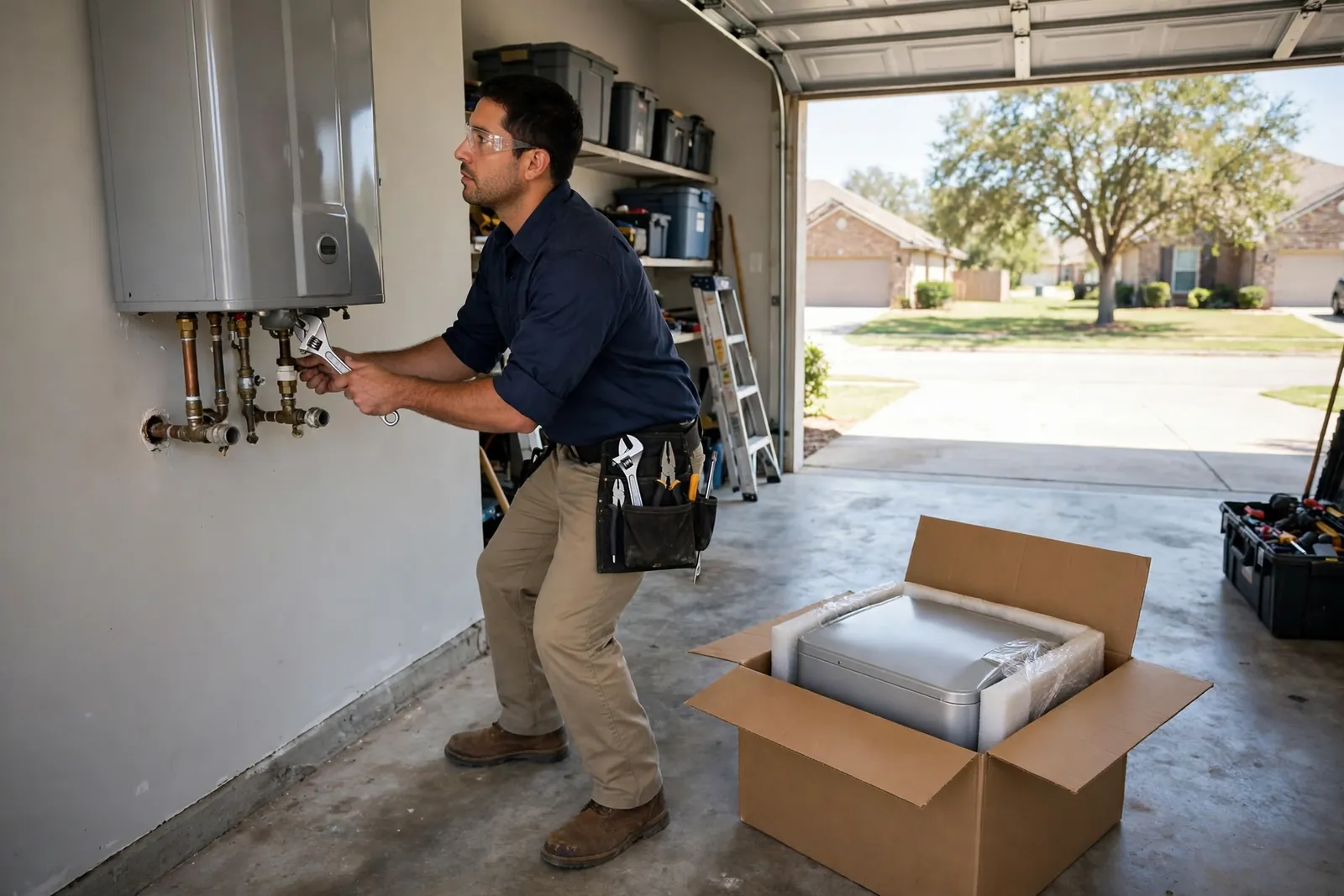
The part fitted where the fault is a part — igniter, sensor, valve, fan or board.
Test at the taps
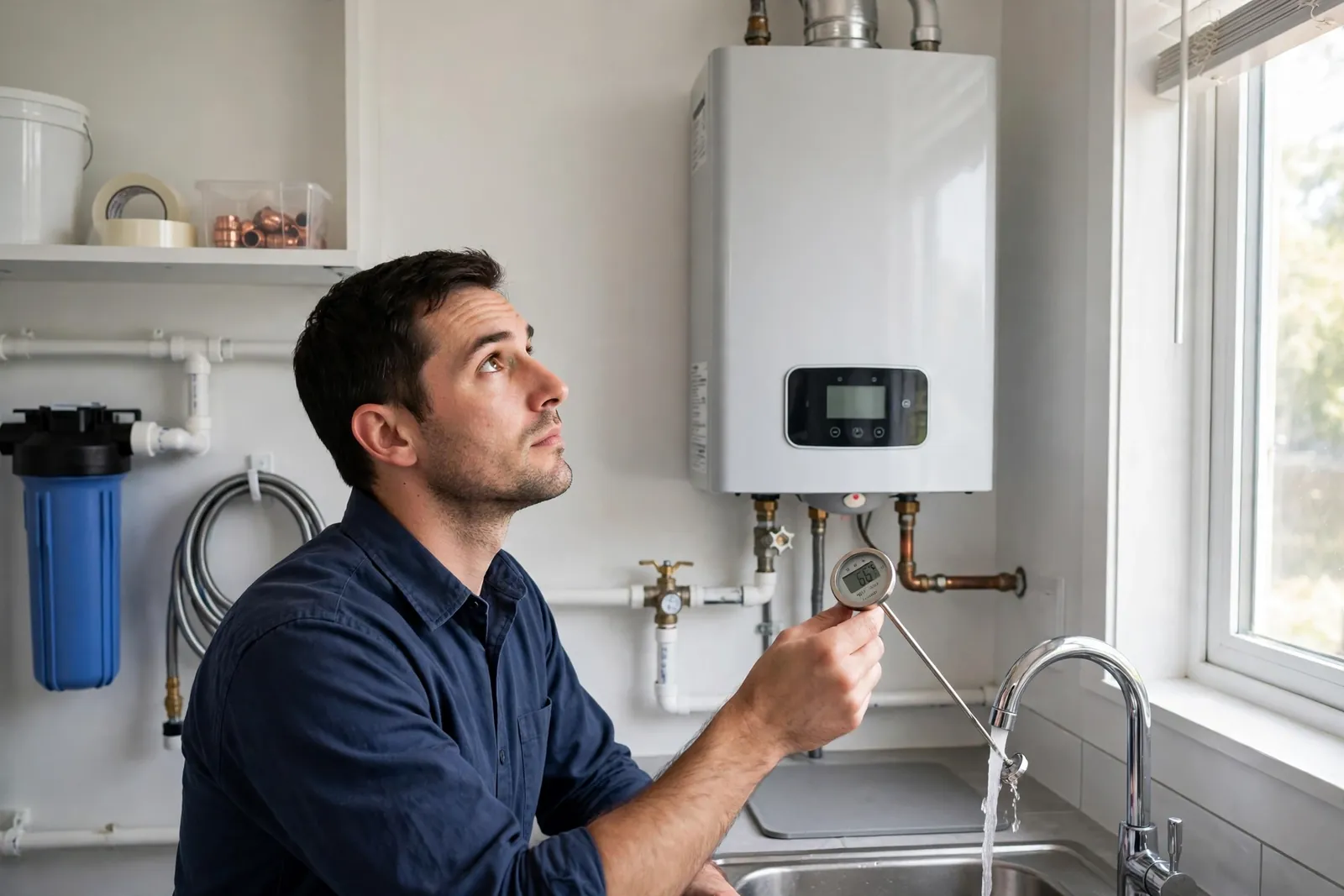
Hot water run at the taps, temperature steady, flow normal, burner clean, no error code showing.
Tools and methods used
Error-code reading
The display code is read first, because it names the fault the unit detected — ignition, overheating, or venting.
Manometer
Gas pressure is measured at the unit, under load, so a starved burner is proven rather than assumed.
Combustion inspection
The burner flame is watched for a clean, steady burn, and the flame sensor is checked for fouling.
Vent inspection
The vent path is inspected for blockage, corrosion and correct sizing, and the terminations are checked.
Electrical meter
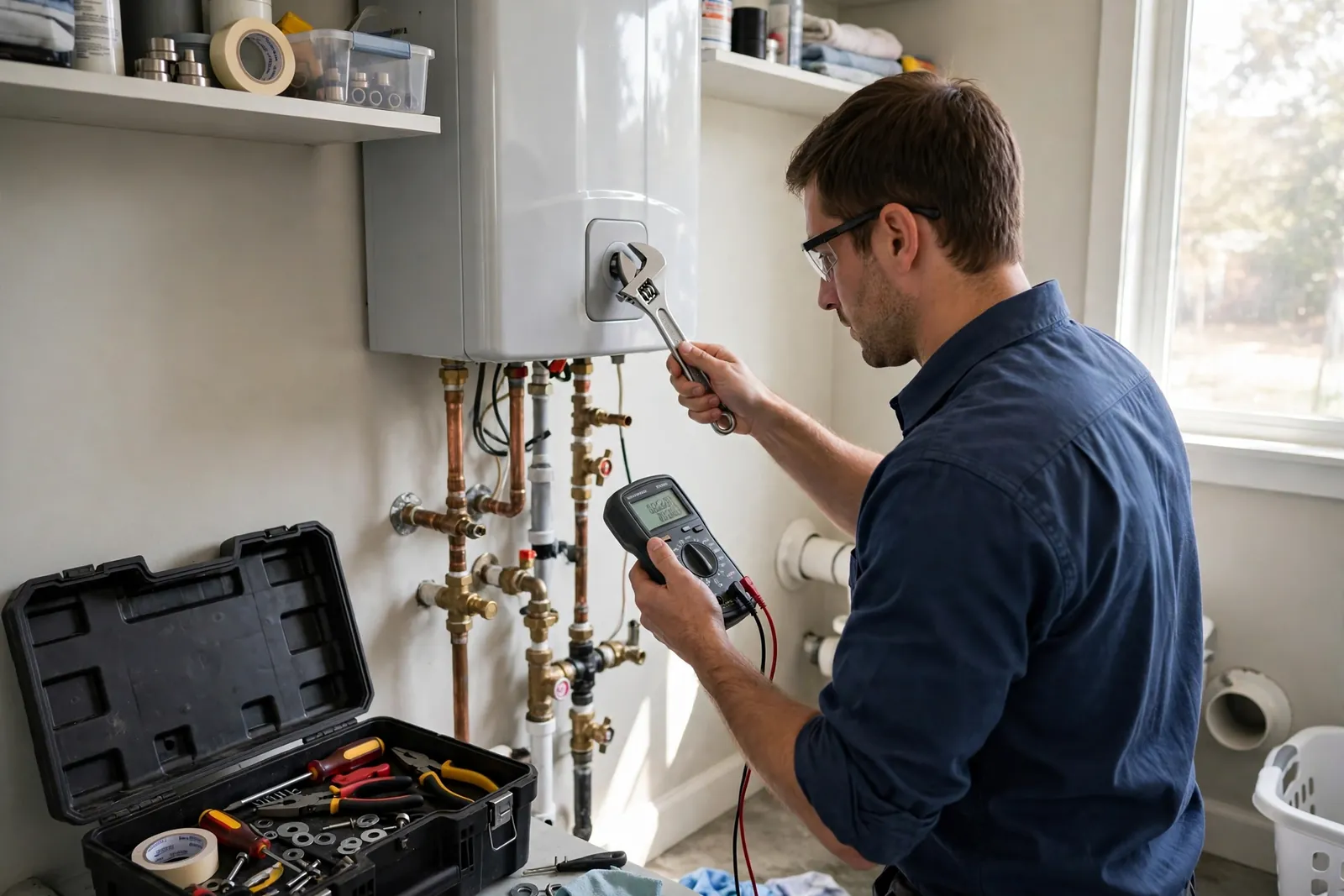
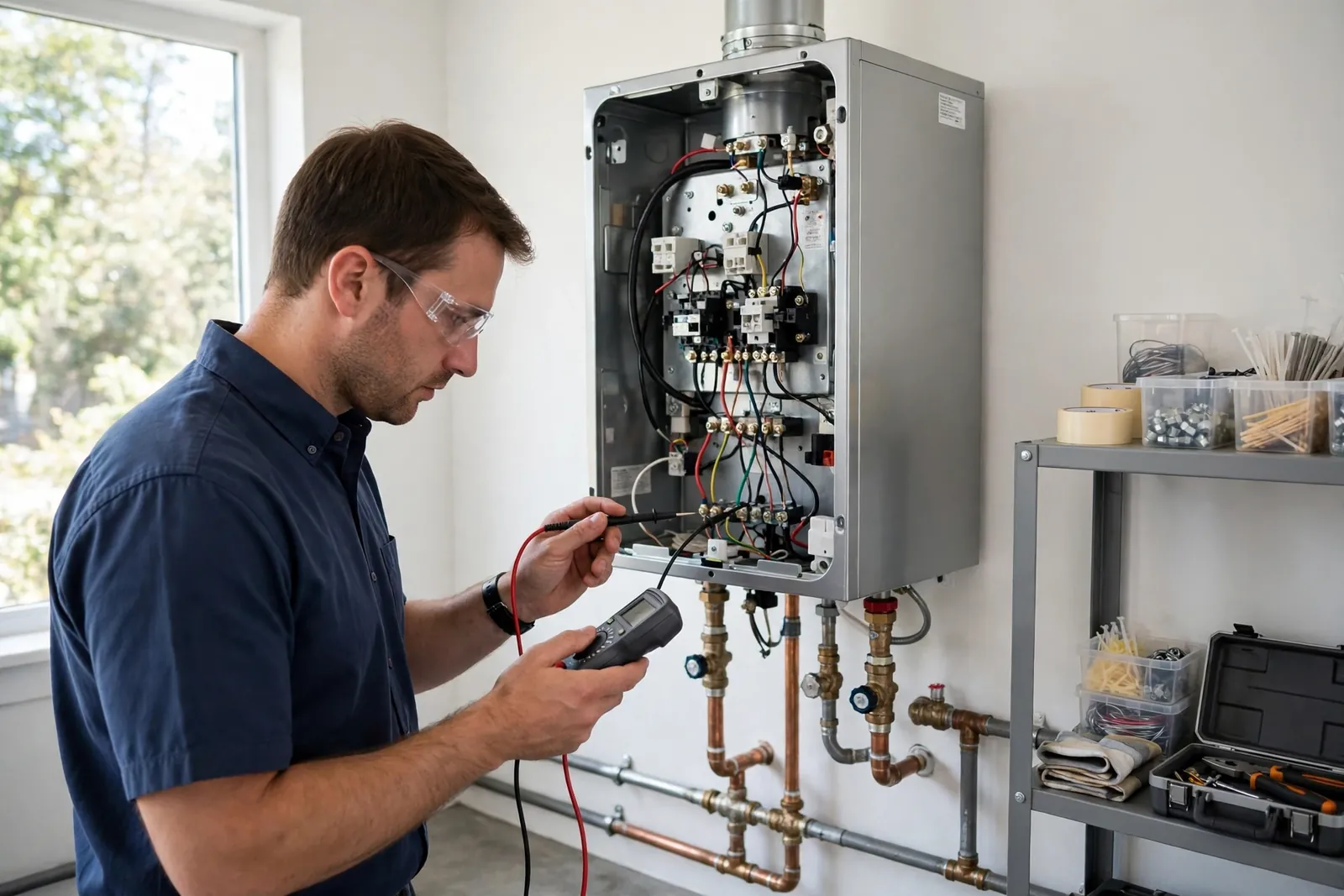
The igniter, sensors and control board are checked electrically, so a failed signal is found at its source.
Leak detection
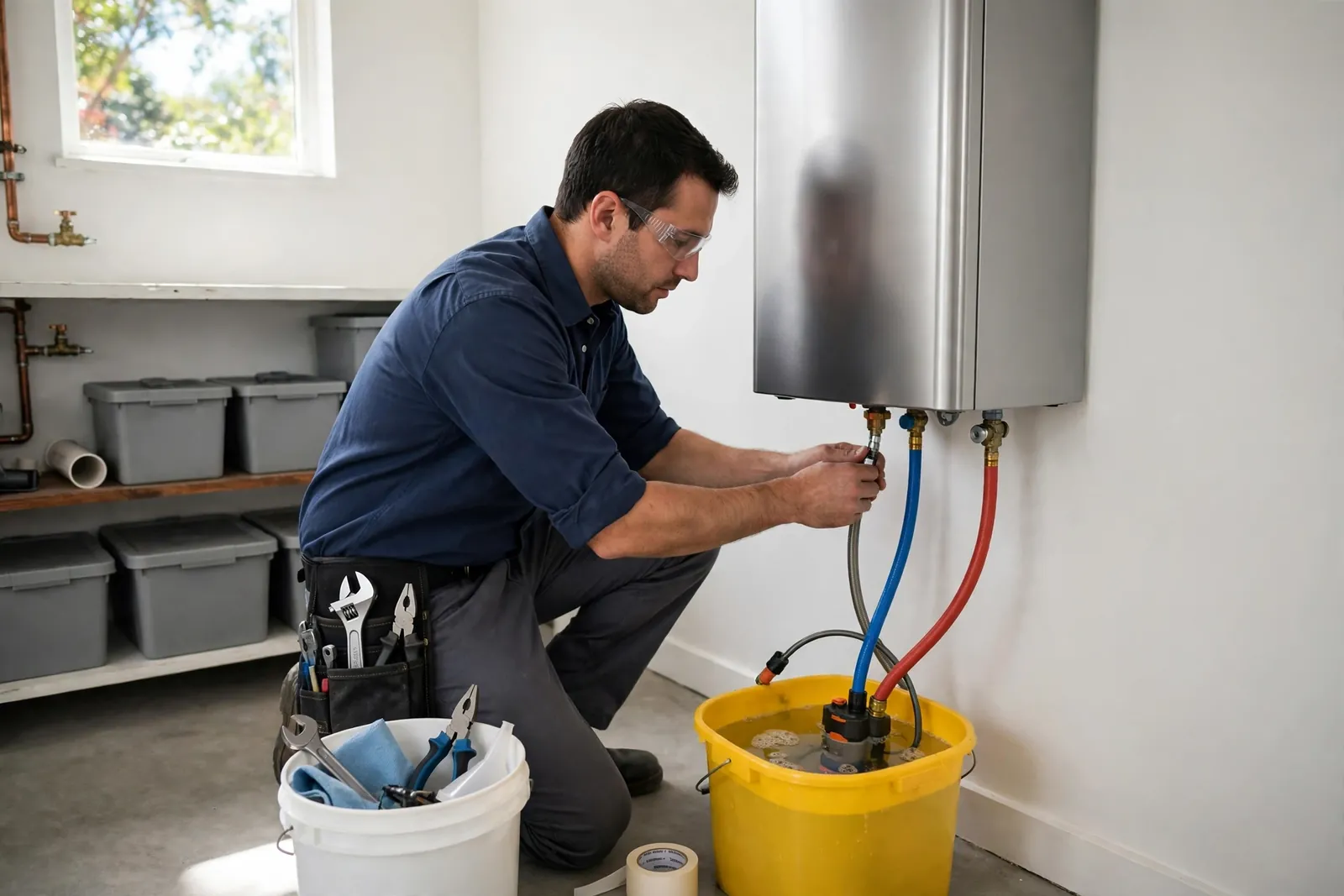
Gas connections are checked for leaks, and the water connections are checked for weeps.
Ignition failure: the diagnosis in order
Ignition failure is diagnosed in the order the chain runs. First the gas: is the valve open, is gas reaching the unit, is the pressure right at the unit under load. Then the spark: is the igniter sparking, is it worn, is the gap right. Then the flame: does the burner light, does the flame sensor confirm it, is the sensor fouled. Then the air: is the combustion air intake clear, is the vent path open. Each check eliminates a cause, and the first check that fails is usually the repair.
The error code narrows the order. An ignition code points to the spark and the flame sensor. An overheating code points to scale or a venting fault. A venting code points to the flue and the exhaust sensor. Codes vary by maker, so the exact code and the make of the unit matter — and the code is written down before the unit is reset, because a reset clears the evidence.
One ignition cause is specific to Sugar Land, and it is the one households miss: the gas supply after other work. A gas valve closed during a renovation, a meter changed by the utility, a regulator that failed quietly — all of these leave the unit with no gas and no obvious reason. The visit checks the supply first for exactly that reason. The simplest cause is checked before the most expensive part.
Venting, condensate, and the February 2021 freeze
Venting and condensate are the two gas-unit systems that winter attacks. A condensate drain that runs outside can freeze in a hard cold snap, and a frozen drain shuts a condensing unit down — the unit protects itself by stopping. The February 2021 freeze did exactly that across the Houston area, and it also cracked heat exchangers and water lines on units that were never drained or protected. The vent path itself can be blocked by ice, nests or debris, and the safety sensors trip the unit off.
The maintenance visit in autumn is the natural moment to check both: the condensate drain for a clear path and a freeze-proof route, the vent for blockage and corrosion, and the freeze protection on the unit itself — the internal heater, the drain-down steps, and the insulation on the water lines. A unit on an outside wall or in an unheated space needs all three, and a unit in a heated garage needs fewer. The check is quick; the repair after a freeze is not.
There is one more winter point, and it is about the gas supply. A hard freeze can affect the gas meter and the regulator outside the house, and a unit that will not light after a cold night may be starved of gas rather than broken. The visit checks the gas pressure at the unit under load, because that reading separates a supply problem from a unit problem in seconds.
A gas unit that will not light, lights and dies, or goes lukewarm when demand peaks
A tankless unit that cannot heat, or heats unevenly, leaves the house without reliable hot water — and the cause is rarely visible from the outside.
A gas unit with fuel, flame and venting proven, repaired, and tested at the taps
The diagnosis names the cause — scale, flow, gas, venting or a failed part — before any work starts, and the fix is tested at the taps.
Problems this service solves
- A gas unit that clicks or sparks but never lights.
- A burner that lights and then dies within seconds.
- Lukewarm water when two taps run, from a starved gas line.
- A venting fault that trips the safety sensors and shuts the unit down.
- A clogged condensate drain shutting a condensing unit down.
- A flame sensor fouled with soot, shutting the gas off.
- A burner that burns unevenly, or a flame that is yellow rather than blue.
- A unit that will not light after a cold night or after other gas work.
Signs your gas tankless unit needs repair
- The unit clicks or sparks but the burner never lights.
- The display shows an ignition or venting error code.
- The water goes lukewarm when another tap opens.
- The burner flame looks yellow or uneven, or the unit smells of exhaust.
- The unit shuts down on cold mornings and works later in the day.
- There is water under the unit from a blocked condensate drain.
- The unit stopped working after gas work elsewhere in the house.
- You smell gas near the unit — leave the house and call from outside.
Related problems
Industries that use this service
Single-Family Homes · Rental Properties · Restaurants and Hospitality · All industries →
Frequently asked questions
Questions people ask about gas tankless water heater repair, answered plainly.
The chain is gas, spark, flame, air. The usual causes are a closed gas valve, no gas reaching the unit, a worn igniter, a fouled flame sensor, or a blocked air intake. The display code narrows it — ignition, overheating, or venting — and the diagnosis checks the chain in order.
A gas tankless unit burns far more gas at full fire than a tank unit does, and a gas line sized for a tank unit starves the burner exactly when demand peaks. Gas pressure is measured at the unit under load to settle it, because a pressure reading ends the argument.
It means the safety sensors detected a problem with the exhaust path — a blocked, corroded or wrongly sized vent, or an exhaust sensor reading out of range. The vent path is inspected for blockage, corrosion and correct sizing, to the unit maker instructions and local code.
Usually the flame sensor is fouled and cannot prove the flame, so the unit shuts the gas off as a safety measure. Scale on the heat exchanger, a venting fault, or a sensor reading wrong can do the same. The visit checks the sensor, the heat exchanger and the vent path before any part is ordered.
A condensing gas unit captures extra heat from its exhaust and produces acidic condensate that drains away through a trap and a drain line. When that drain clogs — or freezes in a hard cold snap — the unit shuts down to protect itself. The drain is checked for blockage and a freeze-proof route.
Leave the house, do not switch lights or appliances on or off, and call your gas utility emergency line and emergency services from outside. Do not try to find the leak, do not relight anything, and do not go back inside until you are told it is safe.
Often, yes. A gas tankless unit at full fire draws a large volume of gas, and the line, meter and regulator must be able to deliver it. A line that is too small starves the burner when demand peaks, and the symptom looks like a faulty unit when the pipe is the problem.
Winter incoming water is much colder, so the unit must deliver a larger temperature rise at the same flow rate. A unit sized for summer conditions can struggle in January without anything breaking. The sizing is re-checked against the coldest incoming water temperature.
About once a year in Sugar Land conditions: a descale and flush, an inlet-filter clean, a burner and flame check, and a vent and condensate-drain check. The autumn visit also covers the freeze protection before winter.
It is effectively a replacement, not a conversion: the fuel, the venting and the electrical supply are all different. The choice is made by the house — gas supply and vent route, or electrical capacity — and the sizing conversation starts from there.
No hot water in your Sugar Land home?
Call Now to reach a local tankless water heater professional. Describe the unit, the symptoms, and any error code on the display.
Call now for tankless water heater help
Tap Call Now to reach a local tankless water heater professional. Tell them the make of the unit if you know it, the symptoms, and any error code on the display.
Hours: Mon–Fri 7:00 AM–10:00 PM ET · Sat 8:00 AM–10:00 PM ET · Sun 7:00 AM–9:00 PM ET
Before you call
- Note the error code on the display, if one shows.
- Check whether other taps have hot water, and whether cold water runs normally.
- If the unit is leaking, shut off its water and gas or power where it is safe to do so.
- Take a photo of the display and the label on the unit.
- Note when the problem started and what changed just before it.