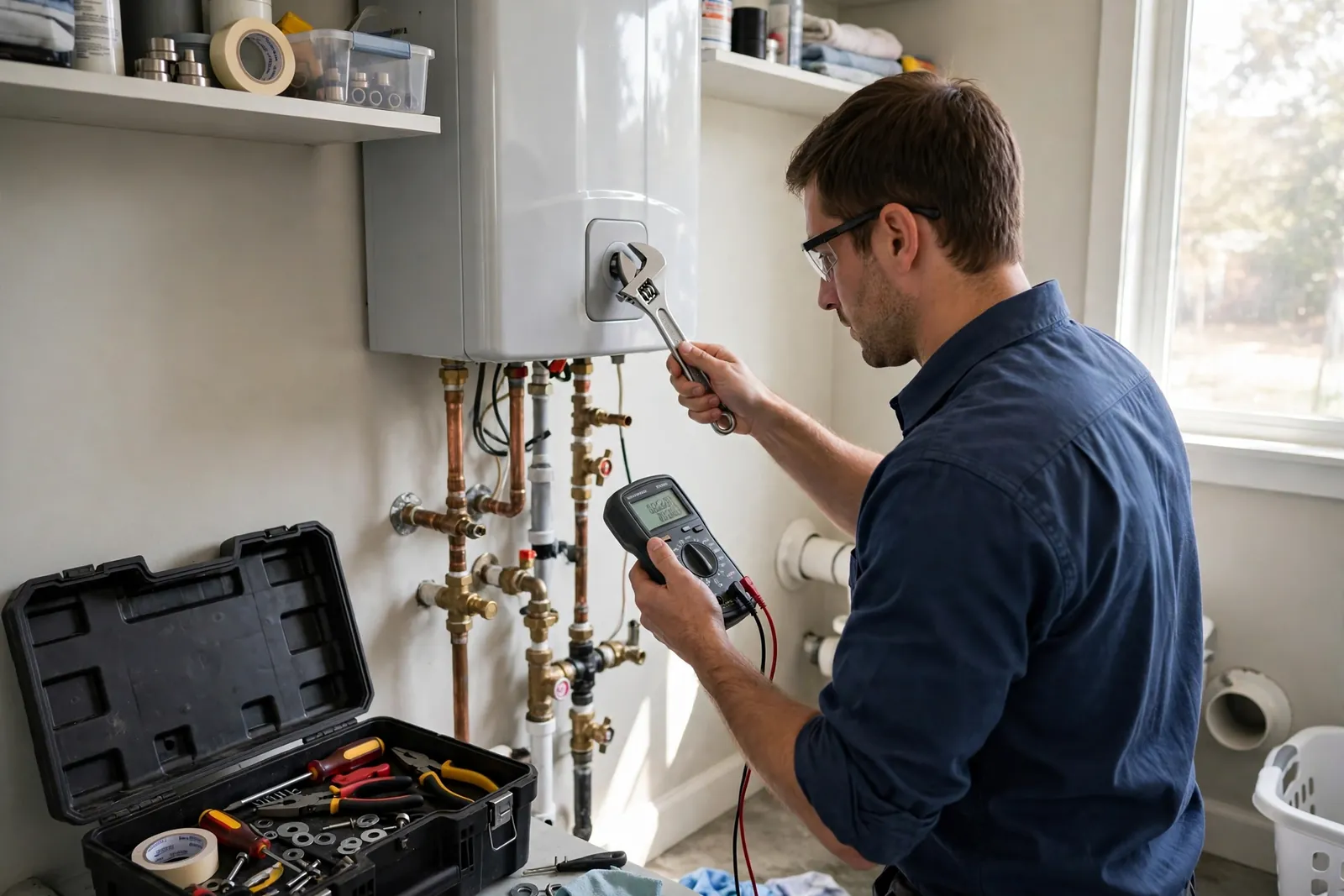
Tankless Water Heater Repair in Sugar Land, TX
A tankless water heater that will not heat, heats unevenly, or throws an error code is a diagnosis job before it is a repair job. The symptoms point to the cause — scale, flow, gas, venting or a failed part — and the visit starts there.
Need help with your tankless water heater?
Call Now to reach a local tankless water heater professional. Describe the unit, the symptoms, and any error code on the display.
Hours: Mon–Fri 7:00 AM–10:00 PM ET · Sat 8:00 AM–10:00 PM ET · Sun 7:00 AM–9:00 PM ET
What this service does
A tankless water heater does one job, and it does it while water is moving: cold water comes in, passes through a heat exchanger, and leaves hot. There is no tank holding hot water in reserve, so when something goes wrong the symptom shows up at the tap within seconds — cold water, lukewarm water, water that turns hot and then cold again, or a unit that lights and then shuts itself off. The repair starts by reading those symptoms the way the unit reads them, because the unit itself is already keeping a record: the error code on the display, the flow rate it sees, the temperature it reaches, and the point where it gives up.
In Sugar Land, the slow cause behind most tankless repairs is the water itself. Houston-area water is hard — the City of Houston water averaged about 8 grains per gallon in the city 2025 water quality report, a level the USGS classifies as hard — and every time a tankless unit fires, minerals in that water heat, solidify and coat the inside of the heat exchanger. The coating starts thin and invisible. Over months it thickens, and the unit has to work harder to push the same heat through it. Showers go lukewarm first, usually at the tap farthest from the unit. Then flow drops. Then the unit starts tripping its overheat protection and showing an error code. By the time a homeowner calls, the scale has usually been building for a year or more without a flush.
The second cause is specific to how the unit is fed. A gas tankless unit needs gas at the right pressure, combustion air, and a vent path that carries exhaust outside. A gas line that is too small for the unit starves the burner when demand peaks — the unit lights, the flame falters, and the water never reaches temperature. A vent that is blocked, corroded or wrongly sized trips the safety sensors and shuts the unit down. An electric tankless unit has the same story on the electrical side: heating elements that fail, a breaker that trips under load, and sensors that read wrong. The symptoms overlap — lukewarm water looks the same whatever the cause — which is why the diagnosis checks the supply first and the parts second.
The third cause is age and wear on the parts that move, sense and ignite. Igniters wear out. Flame sensors foul. Flow sensors stick. Inlet filter screens clog with grit and scale flakes. The pressure relief valve weeps. The condensate drain on a condensing unit clogs and the unit shuts down to protect itself. None of these is a mystery once the unit is open and the readings are taken; each one has a distinct signature in the error code, the flow rate and the temperature rise. A repair that starts with the signature ends with the right part, not a guess.
What a repair visit looks like in practice is simple, and it is worth knowing before you call. The technician reads the display first — the error code, the set temperature, and what the unit does when a tap opens. Then the checks follow in order: water flow at the taps, the inlet filter, the gas or electrical supply, the vent path, and the heat exchanger. Only then does the conversation turn to repair or replacement, and it turns on what was found — a failed sensor is a repair, a leaking heat exchanger usually is not. The work is tested at the taps before the visit ends: hot water running, temperature steady, flow normal, no error code showing.
Before you call
- Note the error code on the display, if one shows.
- Check whether other taps have hot water, and whether cold water runs normally.
- If the unit is leaking, shut off its water and gas or power where it is safe to do so.
- Take a photo of the display and the label on the unit.
- Note when the problem started and what changed just before it.
How a tankless water heater works — and why it fails the way it does
A tankless water heater heats water only while it flows. When a hot tap opens, a flow sensor tells the unit water is moving. A gas unit opens the gas valve and lights a burner; an electric unit energises its heating elements. Cold water passes through the heat exchanger — a coil of copper or stainless steel with a large surface area — and leaves at the set temperature. Close the tap and the unit stops. That is the whole machine, and it is also the whole explanation for its failures: anything that interrupts flow, heat, or the sensor readings that tie them together shows up as a hot-water problem.
Temperature rise is the number that decides whether a unit fits a home. It is the difference between the incoming cold-water temperature and the temperature the unit must deliver, and it changes with the seasons. In a Sugar Land summer the incoming water is warm and the rise is small; in a winter cold snap the incoming water is much colder and the rise is large. A unit sized for summer conditions can struggle in January, when the same flow rate needs far more heat. That is why a unit that was fine in August can go lukewarm in January without anything breaking — and why sizing is part of the diagnosis, not an afterthought.
Flow rate is the other half of the same equation. A tankless unit can heat a fixed amount of water by a fixed number of degrees. Open two showers and a washing machine at once and the flow exceeds what the unit can heat fully, so the temperature drops at every tap. This is not a fault; it is the unit working at its limit. The repair question is whether the limit is the unit itself, or something narrowing it — scale inside the heat exchanger, a clogged inlet filter, or a partially closed valve — because those three are fixable and the unit size is not.
Condensing and non-condensing gas units differ in one important way. A condensing unit captures extra heat from its own exhaust, which makes it more efficient and also means it produces condensate — acidic water that drains away through a trap and a drain line. When that drain clogs, the unit shuts down. A non-condensing unit vents hotter exhaust through a metal flue and makes no condensate, but it is less efficient and its venting rules are different. Knowing which kind is on the wall matters before any venting or condensate work begins, and the label on the unit says which one it is.
What the service includes
Diagnosis at the unit
Error code read, flow and temperature checks, gas or electrical supply check, venting check, inlet filter inspection, and a look at the heat exchanger and condensate drain.
Plain explanation of findings
What failed, why it failed, and what the options are — repair or replacement — in plain words, before any work starts.
Part replacement
Igniters, flame sensors, flow sensors, elements, valves, fans and control boards fitted to the unit, with the work matched to the fault found.
Descaling and flushing
A descale and flush where scale is the cause, with the inlet filter cleaned at the same time and the flow checked afterwards.
Leak repair
Connections, relief valves, condensate drains and fittings traced to the source and repaired, with the water and gas or power shut off safely first.
Testing at the taps
Hot water run at the taps after the work: temperature steady, flow normal, no error code showing, and the unit firing and shutting off as it should.
How the work runs
Call and describe the unit
The make of the unit if you know it, the symptoms, and any error code on the display. A photo of the display and the label helps.
Diagnosis at the unit
Error codes, flow and temperature checks, gas or electrical supply, venting, the inlet filter, and the heat exchanger.
Plain explanation
What was found, what it means, and whether repair or replacement fits — in plain words, before any work starts.
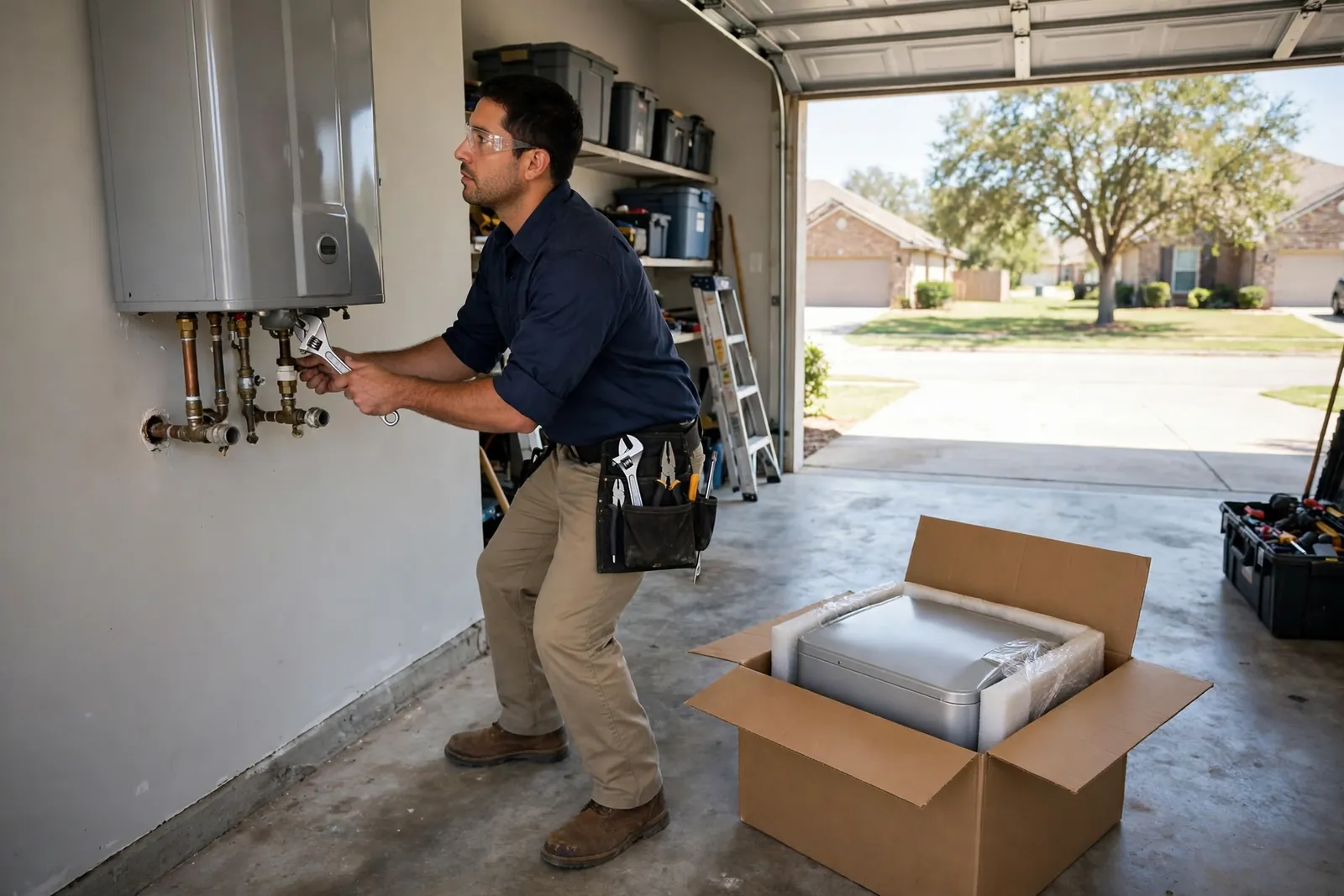
Repair or replacement
The agreed work, with the part or the unit fitted to the home and the connections checked.
Descale where scale is the cause
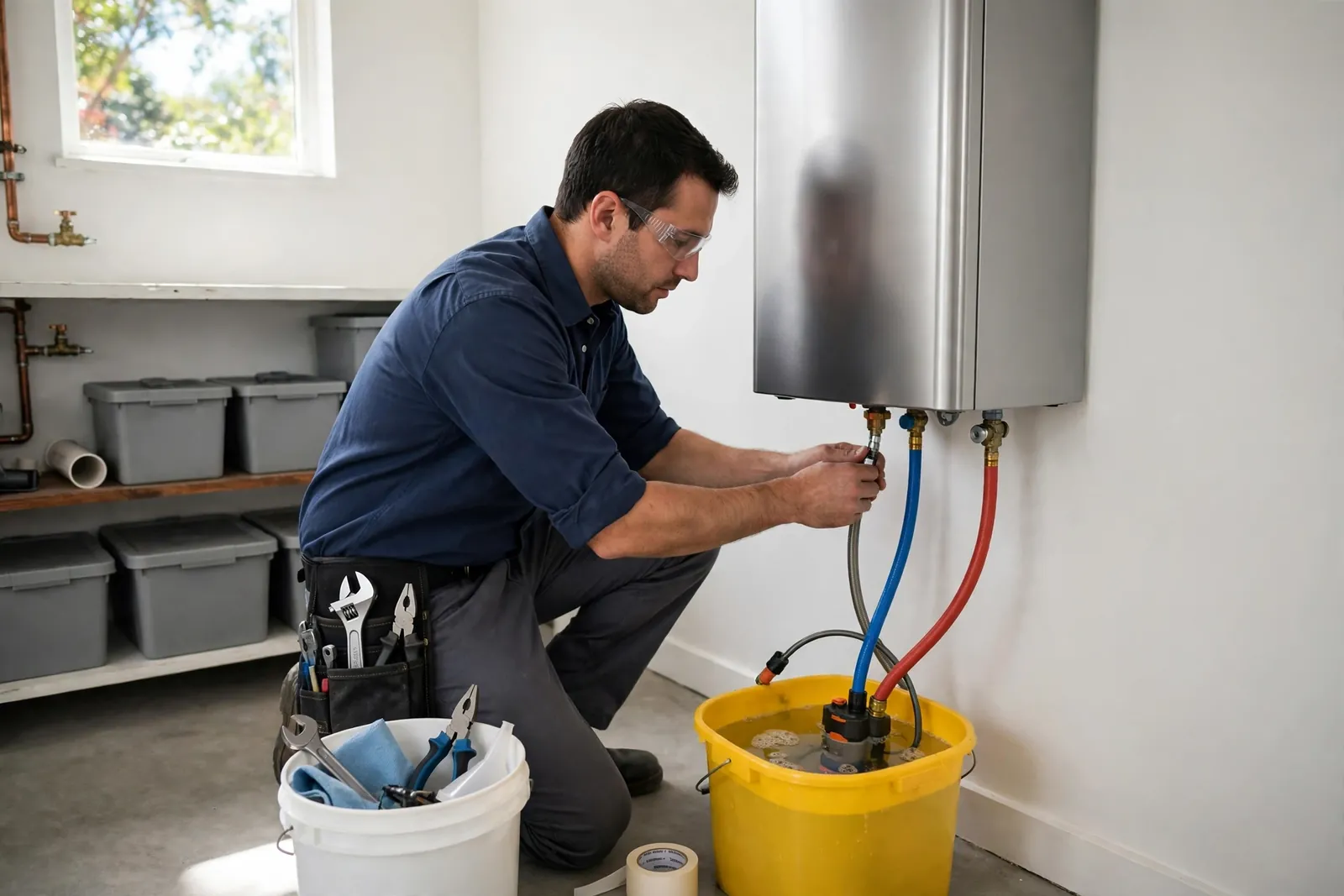
If hard-water scale is behind the fault, the heat exchanger is flushed and the inlet filter cleaned.
Test at the taps
Hot water run at the taps: temperature steady, flow normal, no error code showing, and the unit firing and shutting off as it should.
Tools and methods used
Error-code reading
The display code is read first, because it names the fault the unit detected — ignition, overheating, venting, or a sensor out of range.
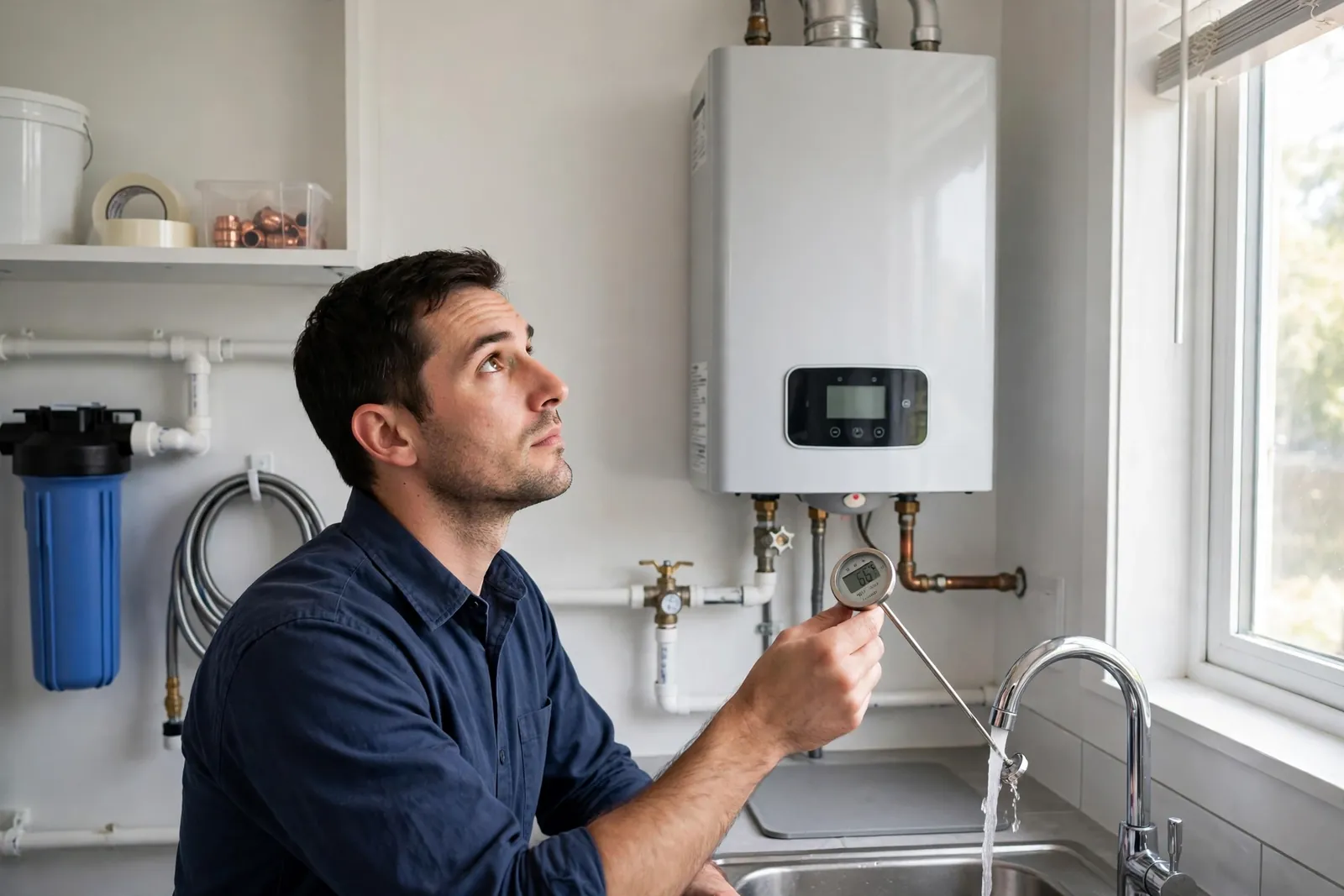
Flow and temperature meters
Flow rate and temperature rise are measured at the taps, so the diagnosis rests on numbers rather than a guess about how hot the water feels.
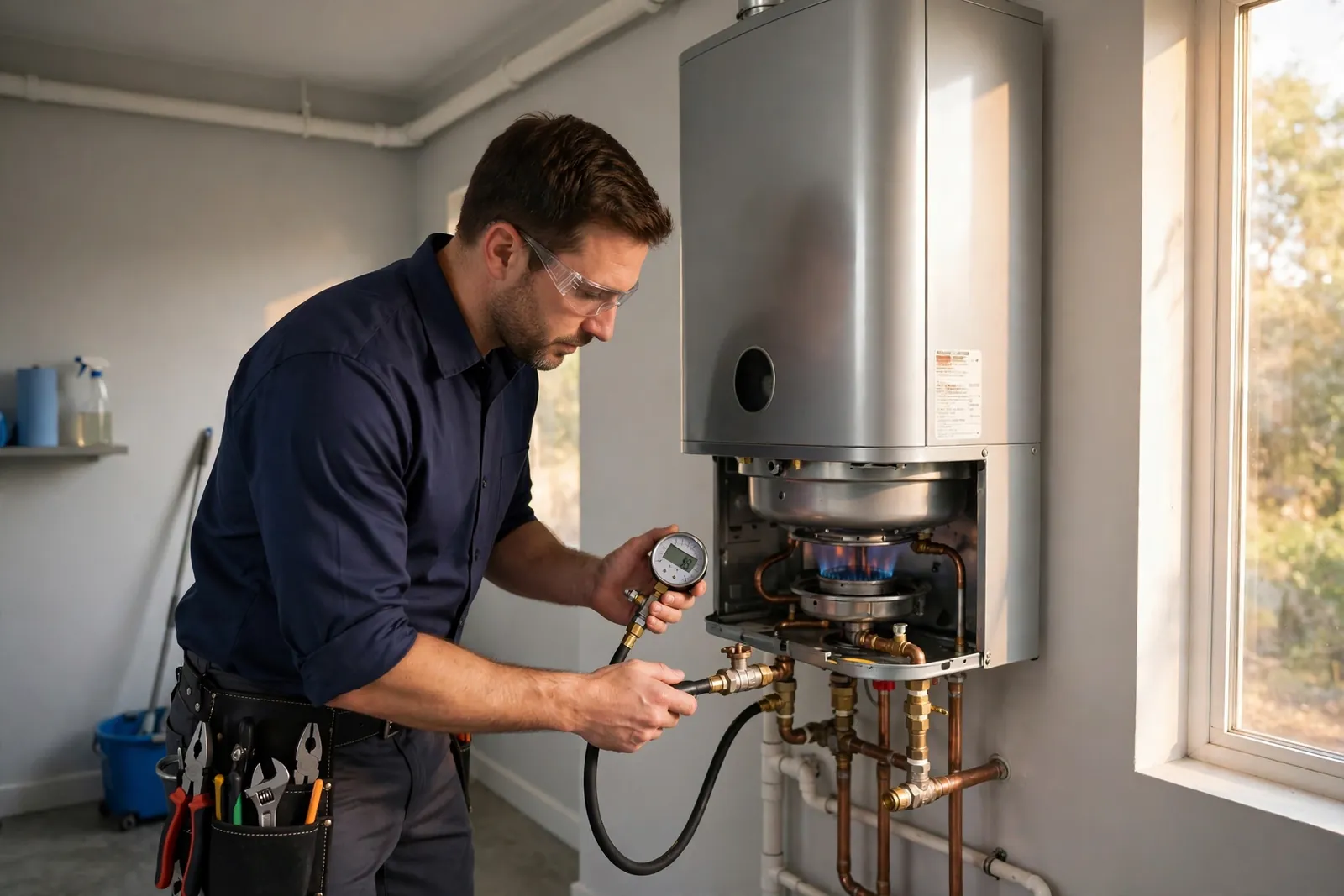
Manometer and gas checks
Gas pressure is checked at the unit, because a gas line that is too small starves the burner exactly when demand peaks.
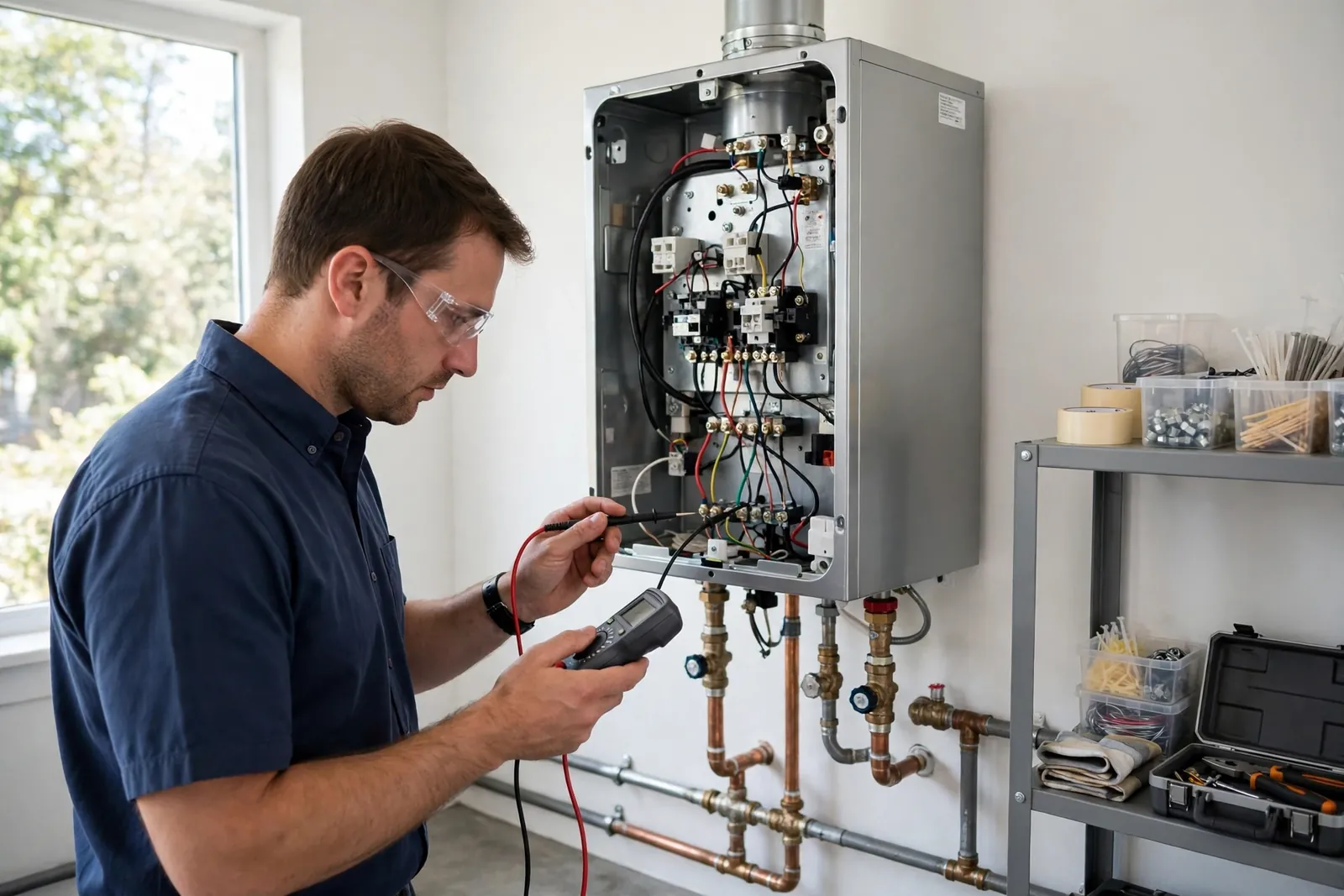
Electrical meter
Voltage, current and continuity are checked on electric units, so a failed element or a tripped breaker is found rather than assumed.
Descaling pump and solution
A circulation pump runs descaling solution through the heat exchanger, dissolving the mineral layer that hard water leaves behind.
Combustion and vent inspection
The vent path is inspected for blockage, corrosion and correct sizing, and the burner is checked for a clean, steady flame.
Why Sugar Land units scale faster than most
Sugar Land sits in the Houston metro, and the metro water supply is hard across Fort Bend County. The hardness number that matters is the one the City of Houston publishes: about 8 grains per gallon in the 2025 water quality report, which the USGS classifies as hard. Some supplies in the wider area test higher. Hardness is dissolved calcium and magnesium, and a tankless heat exchanger is the worst place in a house for it — narrow passages, high temperatures, and water flowing through every day.
Scale does not announce itself. The first sign is usually a shower that is a little less hot than it was, or a tap that takes a little longer to warm up. Then the unit starts working harder: the burner runs longer, the temperature swings, the error code appears on a cold morning when demand is highest. By the time flow has dropped noticeably, the scale layer inside the heat exchanger is thick enough to insulate it, and the metal underneath runs hotter than it was made to. That is the point where a flush stops being maintenance and starts being a rescue — and where a heat exchanger can be damaged beyond flushing.
The routine that prevents this is a descale and flush about once a year, which is the interval most unit makers state for hard-water areas in their care guidance. The flush circulates a descaling solution through the heat exchanger with a pump, dissolving the mineral layer, and the inlet filter is cleaned at the same time. Homes with a water softener can stretch the interval, because the softener removes the calcium and magnesium before they reach the unit. Homes without one should not — in Sugar Land water, a year without a flush is a year of scale.
Repair or replace: how the decision is made
The question every tankless owner eventually asks is whether to repair the unit or replace it, and the honest answer is that it depends on three things: what failed, how old the unit is, and what the heat exchanger looks like. A failed igniter, flame sensor, flow sensor or element is a repair in almost every case — the part is accessible, the fix is direct, and the unit goes back to work. A leaking heat exchanger is the opposite: it is the most expensive part of the unit, and a leak there usually means the unit has reached the end of its serviceable life.
Age matters because parts and support follow it. A unit that is a few years old and has been descaled on schedule is worth repairing; a unit that is well past a decade, has never been flushed, and now needs a major part is often better replaced. The middle ground is where the diagnosis earns its keep: a unit that looks old but has a clean heat exchanger and one failed sensor is a repair, while a young unit with a scaled, leaking heat exchanger is a replacement despite its age. The label on the unit gives its age; the flush water and the inspection give the rest.
One more factor shapes the decision, and it is specific to Sugar Land: the February 2021 freeze. Units that cracked in that cold snap were often repaired at the time, but freeze damage can leave a heat exchanger weakened in ways that show up later as a slow leak. If a unit was freeze-damaged and now leaks, replacement is usually the right call, because the crack is rarely the only weak point. A technician who asks about the 2021 freeze is not making conversation — the answer changes the recommendation.
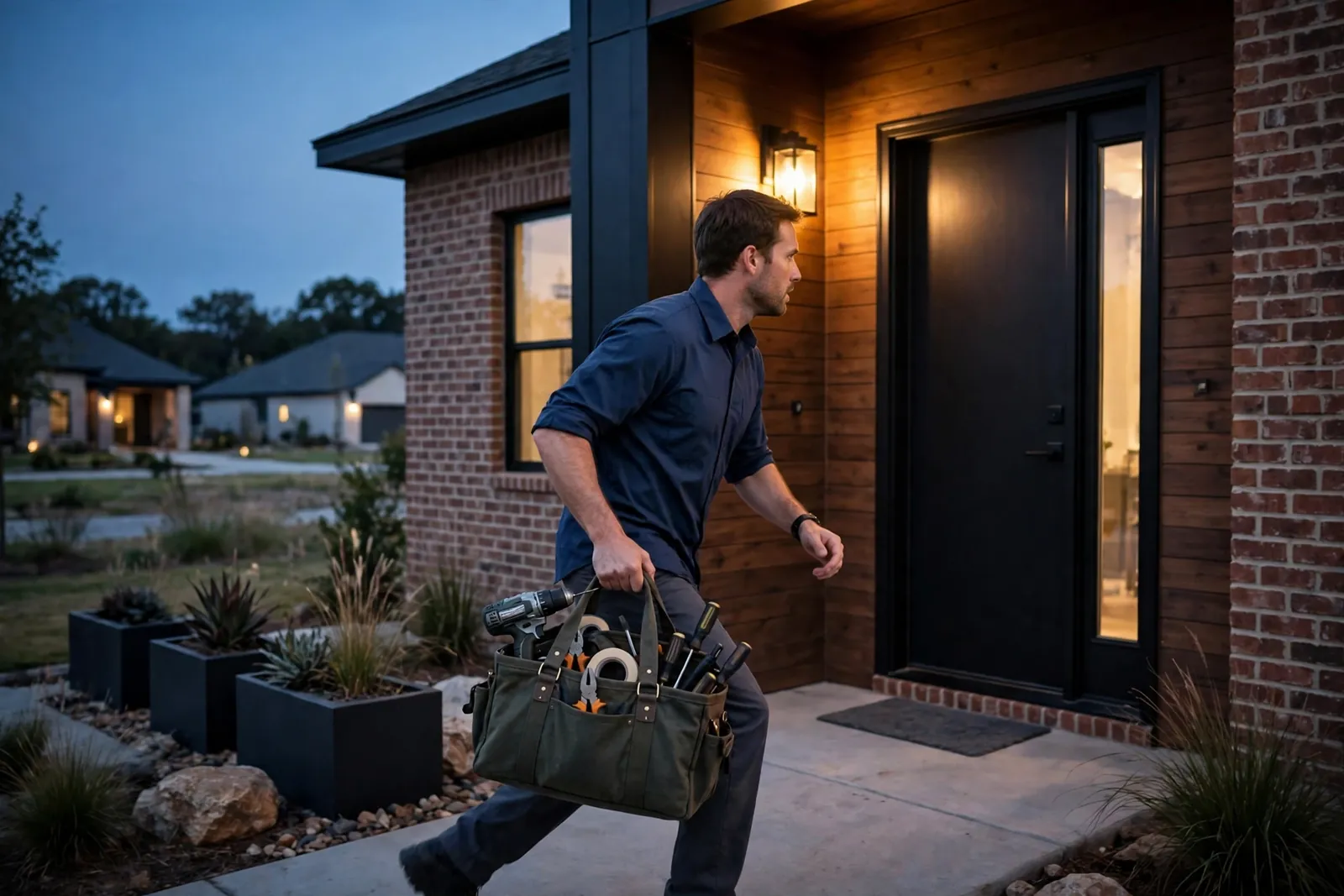
A unit that will not heat, heats unevenly, or keeps shutting off
A tankless unit that cannot heat, or heats unevenly, leaves the house without reliable hot water — and the cause is rarely visible from the outside.
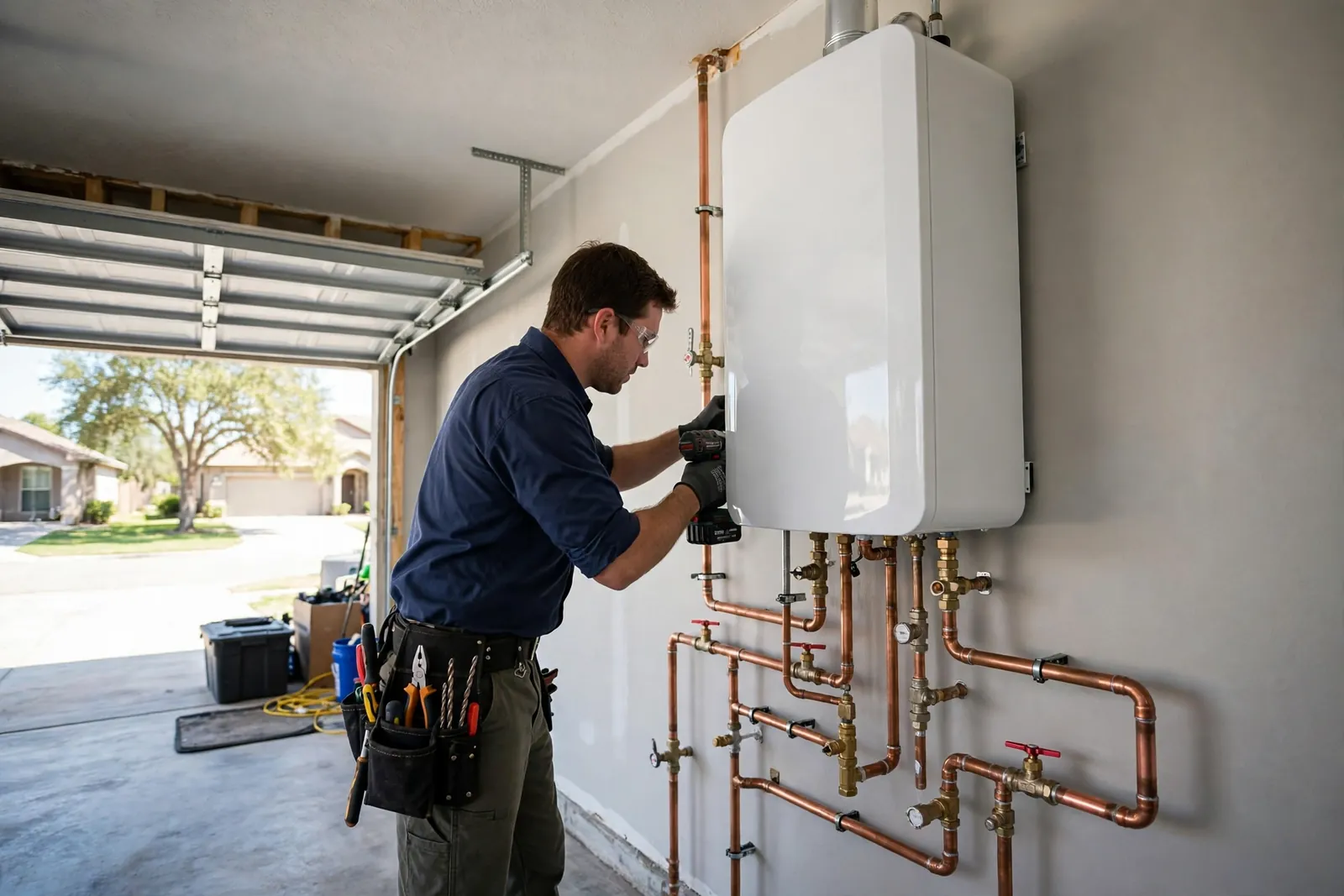
A unit diagnosed, repaired, and tested at the taps
The diagnosis names the cause — scale, flow, gas, venting or a failed part — before any work starts, and the fix is tested at the taps.
Problems this service solves
- No hot water at all from a tankless unit that was working yesterday.
- Lukewarm water that never reaches the set temperature, at one tap or every tap.
- Water that turns hot, then cold, then hot again during a shower.
- An error code on the display that returns after a reset.
- A unit that lights and then shuts itself off within seconds.
- Flow that has dropped at the taps, or a shower that has gone weak.
- A leak under or around the unit, or water staining the wall behind it.
- Rumbling, clicking or vibration from the unit while it heats.
Signs your tankless water heater needs repair
- The display shows an error code, or flashes a code that was not there before.
- Hot water takes much longer to arrive than it used to.
- The shower goes cold when another tap opens.
- The unit fires, then stops, then fires again in a short cycle.
- There is water on the floor or the wall around the unit.
- The burner or the unit makes a rumbling or clicking sound while heating.
- The temperature swings during a shower without anyone touching a tap.
- The unit has not been descaled in over a year and the symptoms are getting worse.
Related problems
Industries that use this service
Single-Family Homes · Rental Properties · Apartments and Condos · All industries →
Frequently asked questions
Questions people ask about tankless water heater repair, answered plainly.
Start with the display: an error code names the fault the unit detected. Common causes are no gas or power to the unit, a tripped breaker, a closed gas or water valve, a clogged inlet filter, or a failed igniter or flow sensor. If the unit is leaking, shut off its water and gas or power where it is safe to do so, then call for help.
Lukewarm water usually means the unit cannot keep up with the flow rate, scale is insulating the heat exchanger, or the incoming water is colder than the unit was sized for. A flush and a flow check are the usual first steps, and the temperature rise is measured to see whether the unit is keeping up.
An error code is the unit reporting what it detected — ignition failure, overheating, a venting fault, or a sensor reading out of range. Codes vary by maker, so the exact code and the make of the unit matter. Write the code down before you call, and do not keep resetting the unit if the code returns.
About once a year is the usual interval here. Houston-area water is hard — about 8 grains per gallon in the City of Houston 2025 water quality report, a level the USGS classifies as hard — and that mineral load coats the heat exchanger a little more every time the unit fires. Homes with a water softener can stretch the interval.
It depends on what failed. A sensor, igniter, element or valve is usually a repair. A leaking or badly scaled heat exchanger often points toward replacement. The diagnosis at the unit decides which one it is, and the age of the unit and its descaling history shape the call.
That is the cold-water sandwich: the unit fires, stops when flow pauses, and the water left in the line cools before the unit fires again. It shows up most in homes where taps open and close often. A recirculation setup is the usual answer where it happens every day.
Leaks come from connections, the pressure relief valve, the heat exchanger, or the condensate drain. A leaking heat exchanger is the serious one — it usually means the unit has reached the end of its serviceable life. If the unit is leaking, shut off its water and gas or power where it is safe to do so.
Low flow at every tap points to the unit and its inlet filter: a clogged filter screen, scale narrowing the heat exchanger, or a partially closed valve. Low flow at one tap points to that fixture. If flow is low everywhere, the unit and its filter are the first things to check.
Yes. The routine is a descale and flush, an inlet-filter clean, a burner and vent check, and a look at the condensate drain and the gas or electrical connections. In Sugar Land hard-water conditions, once a year is the usual interval, and most unit makers state it in their care guidance.
Note the error code on the display, check whether other taps have hot water, and check whether cold water runs normally. Take a photo of the display and the label on the unit. If the unit is leaking, shut off its water and gas or power where it is safe to do so, and note when the problem started.
No hot water in your Sugar Land home?
Call Now to reach a local tankless water heater professional. Describe the unit, the symptoms, and any error code on the display.
Call now for tankless water heater help
Tap Call Now to reach a local tankless water heater professional. Tell them the make of the unit if you know it, the symptoms, and any error code on the display.
Hours: Mon–Fri 7:00 AM–10:00 PM ET · Sat 8:00 AM–10:00 PM ET · Sun 7:00 AM–9:00 PM ET
Before you call
- Note the error code on the display, if one shows.
- Check whether other taps have hot water, and whether cold water runs normally.
- If the unit is leaking, shut off its water and gas or power where it is safe to do so.
- Take a photo of the display and the label on the unit.
- Note when the problem started and what changed just before it.