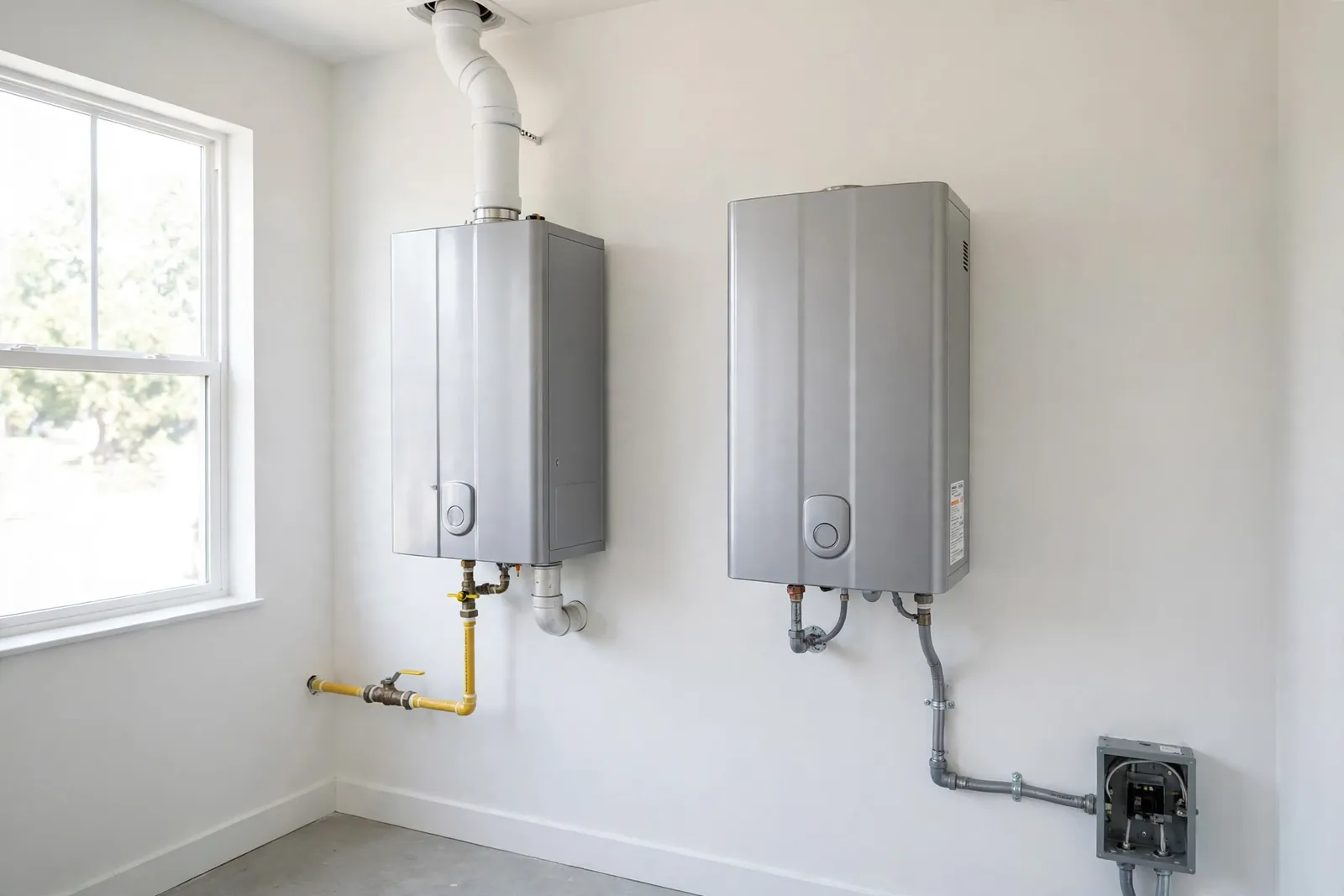
Gas vs Electric Tankless Water Heater in Sugar Land, TX
A gas unit heats more water at once; an electric unit is simpler to vent and install. The choice turns on the flow rate the home needs, the gas line, the panel, and the coldest incoming water in January.
Sugar Land Tankless Pros · 2026-11-17 · Comparison Guide
The short version
Problem: A gas unit heats more water at once, so it serves larger homes and colder incoming water better.
What to do: An electric unit is simpler to vent and install, but it needs the panel and the circuits to carry the load.
When to call: The choice turns on the flow rate the home needs, the gas line, the panel, and the coldest incoming water in January.
How the two heat water
A gas tankless unit heats water with a burner, fed by a gas line, and vented through a flue. The burner fires when the flow sensor detects enough water moving, and it modulates — burning harder or softer — to hold the set temperature as the flow changes. The burner is powerful, and the power is the point: a gas unit can heat a large flow by a large temperature rise, which is what a large home and a cold January need.
An electric tankless unit heats water with elements, fed by the electrical panel. The elements energise when the flow sensor detects enough water moving, and they modulate to hold the set temperature. The unit is simpler — no burner, no vent, no gas line, no condensate drain — and the simplicity is the point: the installation is a plumbing and electrical job, not a venting job.
The difference is the difference between a powerful burner and a simple element. The burner heats more water at once. The element is simpler to install and to maintain. The home decides which one matters more.
Flow rate and winter performance
A gas unit heats more water at once, and that is the fact that decides the comparison for a large home. Two showers and a washing machine together are a flow rate a gas unit meets comfortably and an electric unit meets only where the panel and the circuits can carry the load. The flow rate the home needs, at the coldest incoming water temperature, is the number the choice is made on.
Winter is the test. Incoming water in January is much colder than in July, so the unit must deliver a larger temperature rise at the same flow rate. A gas unit, with its powerful burner, meets the winter rise more easily. An electric unit, sized for summer conditions, can struggle in January without anything breaking — and the household notices it at the shower.
The sizing is re-checked against the coldest incoming water temperature, not the average. A unit sized for summer is a unit that goes lukewarm in January. The sizing conversation asks about the fixtures, the people, and the coldest weeks, because the unit must deliver on a January morning, not only on a summer afternoon.
Gas lines, panels and venting
A gas unit needs a gas line that can deliver the pressure the burner needs at peak, and the line is checked at the unit, under load. A gas line sized for a tank unit starves a tankless burner exactly when demand peaks, and the water goes lukewarm when two taps run. A conversion from tank to tankless therefore includes a gas-line check, and often a gas-line upgrade.
An electric unit needs a panel that can carry the load, and circuits sized for the elements. A panel that cannot carry the load trips the breaker every time the unit tries to heat, and the unit heats only partly — or not at all. The panel and the circuits are checked before the unit is chosen, because a unit the panel cannot carry is a unit that will not work.
Venting is the gas-unit question an electric unit never asks. A gas unit needs a vent rated for its exhaust temperature, sized to the unit maker instructions and local code, and the vent route matters — a long or wrongly sized vent is a fault, not a detail. An electric unit has no vent, no flue, and no condensate drain, and the installation is simpler for it.
Maintenance and lifespan
Both need the yearly descale and flush in Sugar Land water, with the inlet filter cleaned at the same time. Hard water coats the heat exchanger a little more every time the unit fires, whatever heats it — and the flush is the routine the water demands, for gas and electric alike.
The parts differ. A gas unit has a burner, an igniter, a flame sensor, a fan and a vent — and the maintenance visit checks them all. An electric unit has elements and electrical connections, and the visit tests the elements one by one. The gas unit has more parts to wear; the electric unit has fewer, and the parts it has are simpler.
The lifespan is set by the same three things for both: the water, the maintenance, and the parts. A unit that is descaled on schedule commonly serves a home for about two decades, gas or electric. The water is the deciding factor, not the fuel.
Which one fits a Sugar Land home
A large Sugar Land home, with big bathrooms and several hot-water draws at once, is the natural gas home — where the gas line can deliver, the venting is right, and the household keeps the yearly descale. The flow rate is the payoff, and the venting and the gas line are the price.
A smaller home, or a home without a gas line, is the natural electric home — where the panel can carry the load, the unit is sized for the peak, and the installation is simple. The simplicity is the payoff, and the flow rate is the price.
A home with a gas line that cannot deliver, and a panel that cannot carry the load, is a home where the choice is made by the supply, not the preference. The gas line and the panel are checked first, because a unit the supply cannot carry is a unit that will not work.
Switching between gas and electric
A switch from gas to electric, or from electric to gas, is a supply job as much as a unit job. The gas line or the panel is checked first, because a unit the supply cannot carry is a unit that will not work. A gas unit needs a line that can deliver the pressure the burner needs at peak; an electric unit needs a panel and circuits that can carry the load the elements draw.
The venting is added or removed with the switch. A gas unit needs a vent rated for its exhaust temperature, sized to the unit maker instructions and local code. An electric unit has no vent, no flue, and no condensate drain, and the installation is simpler for it. The switch is therefore a venting job as well as a plumbing job, and the vent route is planned before the unit is ordered.
The sizing is re-checked with the switch, because the choice of fuel changes what the unit can do. A gas unit heats more water at once, so it serves a larger peak more easily; an electric unit is simpler to install, but it needs the panel to carry the load. The sizing conversation asks about the fixtures, the people, and the coldest incoming water — because the unit must deliver on a January morning, not only on a summer afternoon.
Related: lukewarm water problem · gas tankless water heater repair · tankless water heater help in Sugar Land
Related guides
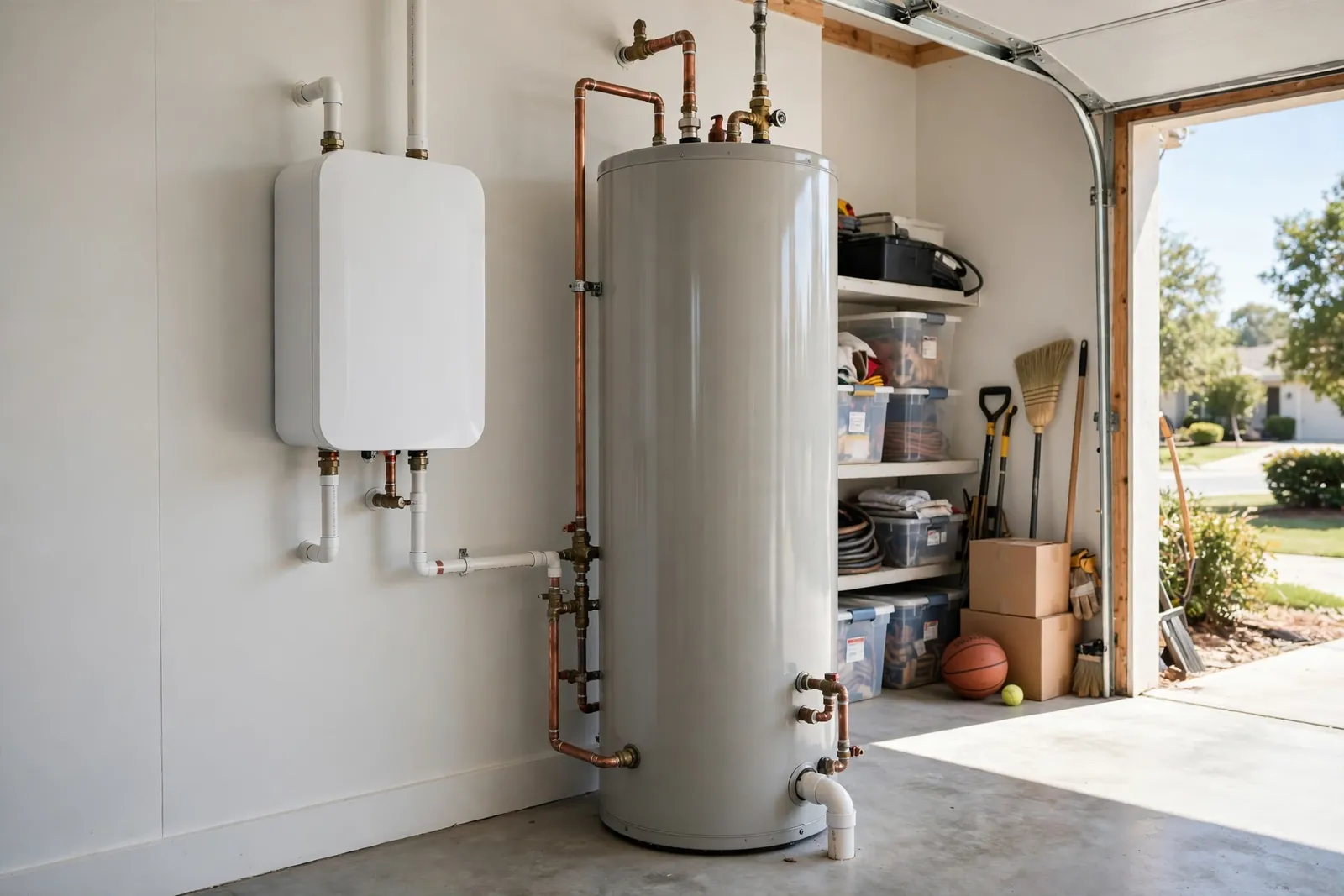 Comparison Guide
Tankless vs Tank Water Heater in Sugar Land, TX
A tankless unit heats water as it flows; a tank unit keeps a store of hot water ready. The choice turns on the household peak, the hard water here, and how much the family values endless hot water against a simpler unit.
 Lifespan Guide
How Long Do Tankless Water Heaters Last in Sugar Land, TX?
A tankless water heater that is descaled on schedule can serve a Sugar Land home for two decades. The lifespan is set by the water, the maintenance, and the parts — and the hard water here is the deciding factor.
 Maintenance Guide
Tankless Water Heater Maintenance Checklist in Sugar Land, TX
The yearly routine, the autumn freeze check, and what to watch between visits. This checklist covers the descaling, the filter, the burner, the venting, and the record — everything a Sugar Land unit needs in a year.
Frequently asked questions
Questions people ask about this topic, answered plainly.
It depends on the home. A gas unit heats more water at once, so it serves larger homes and colder incoming water better. An electric unit is simpler to vent and install, but it needs the panel and the circuits to carry the load.
It can, where the panel and the circuits can carry the load and the unit is sized for the home peak. A gas unit meets a large peak more easily, because the burner heats more water at once.
Often, yes. A gas unit draws far more gas at peak than a tank unit, and a gas line sized for a tank unit starves a tankless burner exactly when demand peaks. The gas line is checked at the unit, under load, before the unit is chosen.
The panel cannot carry the load the unit draws, or a circuit is undersized for the elements. A breaker that trips every time the unit tries to heat is a load problem, not a unit problem — and the panel is the answer.
It has more parts to check — burner, igniter, flame sensor, fan and vent — and the maintenance visit checks them all. An electric unit has fewer parts, and the parts it has are simpler. Both need the yearly descale and flush in Sugar Land water.
Yes. A gas unit needs a vent rated for its exhaust temperature, sized to the unit maker instructions and local code. An electric unit has no vent, no flue, and no condensate drain.
A gas unit, usually, because the burner meets the larger temperature rise January demands more easily. An electric unit sized for summer conditions can struggle in January without anything breaking.
Yes, and the switch is a supply job as much as a unit job: the gas line or the panel is checked first, because a unit the supply cannot carry is a unit that will not work. The venting is added or removed with the switch.
Still have questions?
Call Now to reach a local tankless water heater professional — describe the water and the rooms it reached.
Call now for tankless water heater help
Tap Call Now to reach a local tankless water heater professional. Tell them the make of the unit if you know it, the symptoms, and any error code on the display.
Hours: Mon–Fri 7:00 AM–10:00 PM ET · Sat 8:00 AM–10:00 PM ET · Sun 7:00 AM–9:00 PM ET
Before you call
- Note the error code on the display, if one shows.
- Check whether other taps have hot water, and whether cold water runs normally.
- If the unit is leaking, shut off its water and gas or power where it is safe to do so.
- Take a photo of the display and the label on the unit.
- Note when the problem started and what changed just before it.