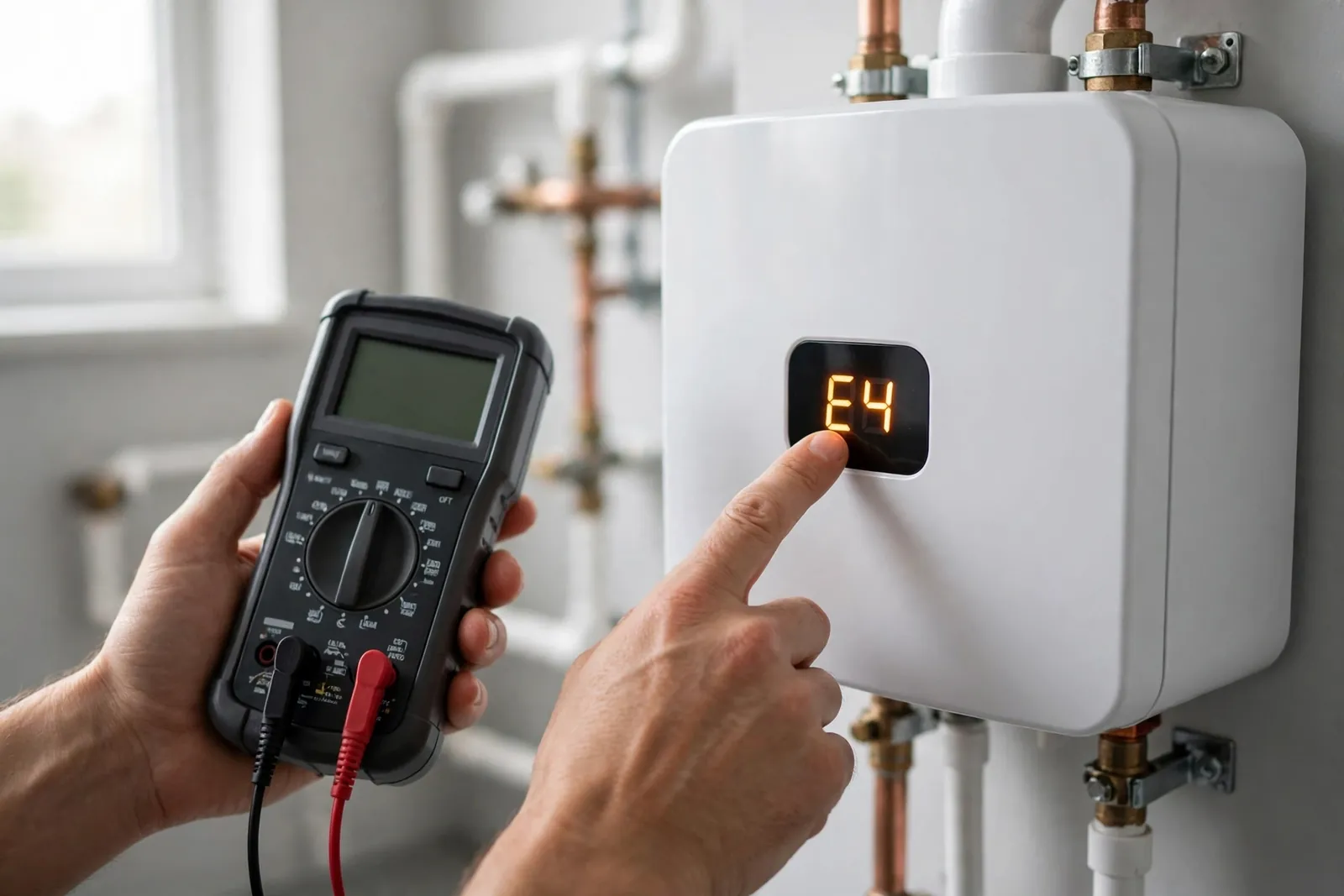
Tankless Water Heater Error Code Repair in Sugar Land, TX
An error code is the unit telling you what it detected. The code is written down before any reset, because the code decides what the visit covers — ignition, overheating, venting, or a sensor out of range.
Need help with your tankless water heater?
Call Now to reach a local tankless water heater professional. Describe the unit, the symptoms, and any error code on the display.
Hours: Mon–Fri 7:00 AM–10:00 PM ET · Sat 8:00 AM–10:00 PM ET · Sun 7:00 AM–9:00 PM ET
What this service does
A tankless water heater watches itself. Flow sensors, temperature sensors, flame sensors, vent sensors and overheat sensors report to the control board, and when one of them reads outside its range the board shuts the unit down and shows a code. The code is the unit diagnosis, in its own language — and the repair starts by reading it, not by clearing it. A reset clears the display, not the fault, and if the code returns the unit is still detecting the same problem.
Codes fall into families, and the family matters more than the number. Ignition codes mean the unit tried to light and could not — no gas, a worn igniter, a fouled flame sensor, or no combustion air. Overheat codes mean the heat exchanger ran too hot — scale insulating it, flow too low, or a sensor reading wrong. Venting codes mean the exhaust path is wrong — a blocked, corroded or wrongly sized vent, or an exhaust sensor out of range. Sensor codes mean a reading the board cannot trust. Codes vary by maker, so the exact code and the make of the unit are both needed, and the label on the unit gives the make.
The first step is always the same: write the code down. Then note what the unit does when a tap opens — does it fire, does it light, does it stay lit, does it show the code again. Then the simple checks: cold water running normally, the breaker panel, the gas valve, the inlet filter. Then the visit, where the diagnosis follows the code: ignition codes lead to the gas supply, the igniter and the flame sensor; overheat codes lead to the heat exchanger, the flow and the scale; venting codes lead to the flue and the exhaust sensor.
One habit makes error codes harder than they need to be: resetting the unit over and over. Each reset clears the code and the evidence with it, and a unit that keeps shutting off is protecting itself from damage — every cycle adds wear. A code that returns after one reset is a fault that needs finding, not clearing. The visit reads the code, follows it to the fault, and fixes the fault — and the code stays gone because the cause is gone.
Sugar Land adds its own pattern to error codes. Hard water scale is the slow cause behind overheat codes here: the heat exchanger, insulated by scale, runs hotter than it was made to, and the overheat sensor trips on cold mornings when demand is highest. The February 2021 freeze is the fast cause: units that cracked in that cold snap show leak and sensor codes that trace back to the freeze. The code is the starting point; the water and the winter are the context.
Before you call
- Note the error code on the display, if one shows.
- Check whether other taps have hot water, and whether cold water runs normally.
- If the unit is leaking, shut off its water and gas or power where it is safe to do so.
- Take a photo of the display and the label on the unit.
- Note when the problem started and what changed just before it.
What error codes mean — the families, and what follows each one
Ignition codes are the unit saying it tried to light and could not. The chain is gas, spark, flame, air: the gas valve opens, the igniter sparks, the burner lights, the flame sensor confirms the flame. A break anywhere in that chain is an ignition code. The diagnosis checks the chain in order — gas supply first, because a closed valve or an interrupted supply is the simplest cause, then the igniter, then the flame sensor, then the combustion air. A fouled flame sensor is the classic ignition repair: the sensor is coated with soot, it cannot prove the flame, and the unit shuts the gas off as a safety measure.
Overheat codes are the unit saying the heat exchanger ran too hot. The causes are scale insulating the exchanger, flow too low to carry the heat away, or a sensor reading wrong. In Sugar Land the first cause is the common one: hard water scale, built up over a year or more without a flush, until the metal underneath runs hotter than it was made to. The visit checks the flow, the inlet filter and the heat exchanger, and a descale follows where scale is the cause. An overheat code that returns after a flush points to the sensor or to damage the scale already did.
Venting codes are the unit saying the exhaust path is wrong. A blocked, corroded or wrongly sized vent, an exhaust sensor out of range, or a condensate drain that has clogged or frozen — each one trips the safety sensors and shuts the unit down. The vent path is inspected for blockage, corrosion and correct sizing, to the unit maker instructions and local code, and the condensate drain is checked for a clear, freeze-proof route.
Sensor codes are the unit saying it cannot trust a reading. A flow sensor that is stuck, a temperature sensor reading wrong, a flame sensor fouled, an exhaust sensor out of range — each one leaves the board without the information it needs to run safely, so it stops. Sensor codes are diagnosed by testing: the sensor is checked against a known reading, and a sensor that reads wrong is replaced. A sensor code that returns after the sensor is replaced points to the board, or to the wiring between them.
What the service includes
Code reading and recording
The exact code written down before any reset, with the make of the unit from the label.
Diagnosis by code family
Ignition, overheat, venting or sensor — the checks follow the family the code names.
Gas and electrical checks
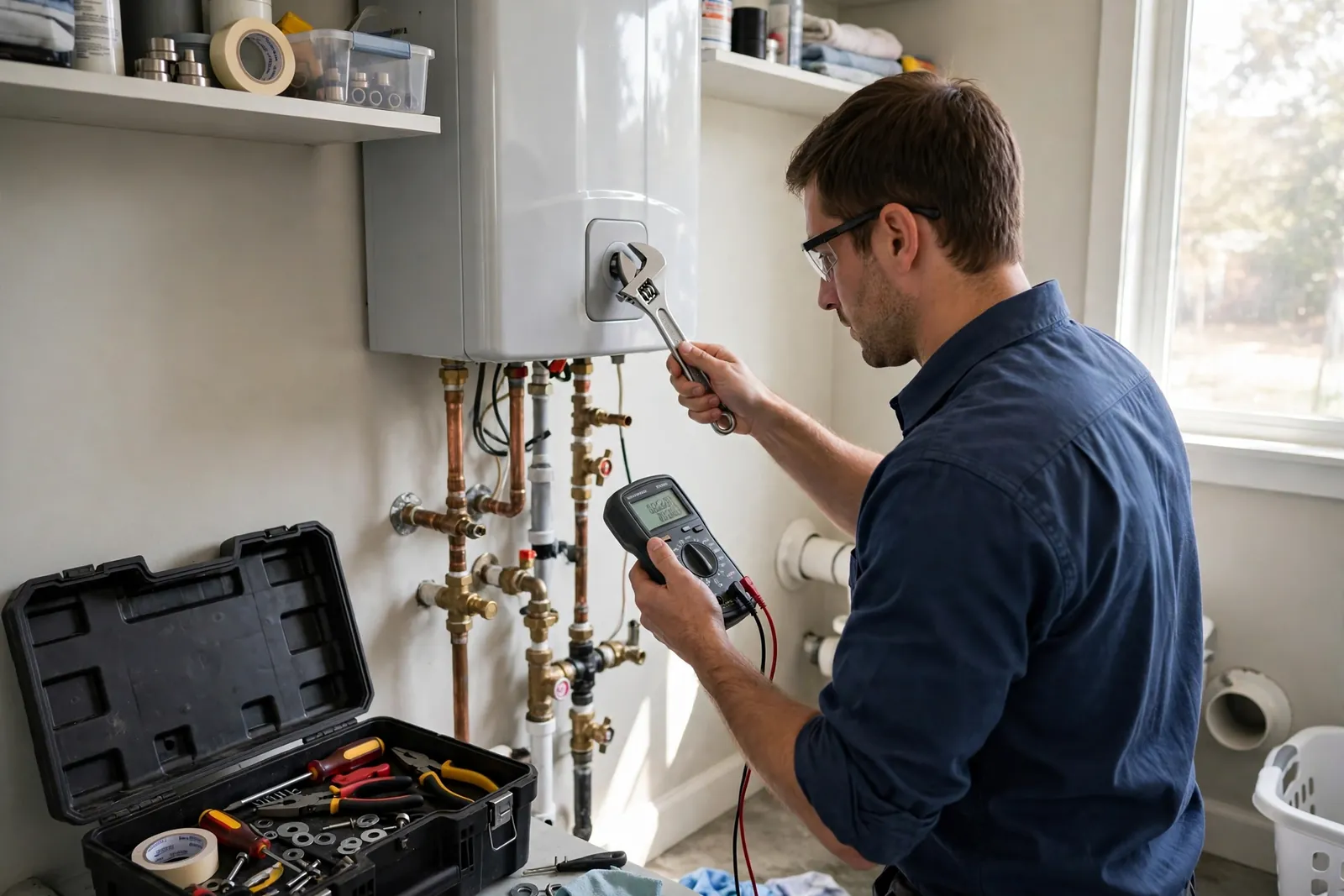
Gas pressure measured at the unit under load; voltage, current and continuity checked on electric units.
Scale and flow checks
Flow and temperature measured, inlet filter inspected, heat exchanger assessed — and flushed where scale is the cause.
Venting and condensate checks
Vent path inspected for blockage and corrosion; condensate drain checked for a clear, freeze-proof route.
Part replacement and retest
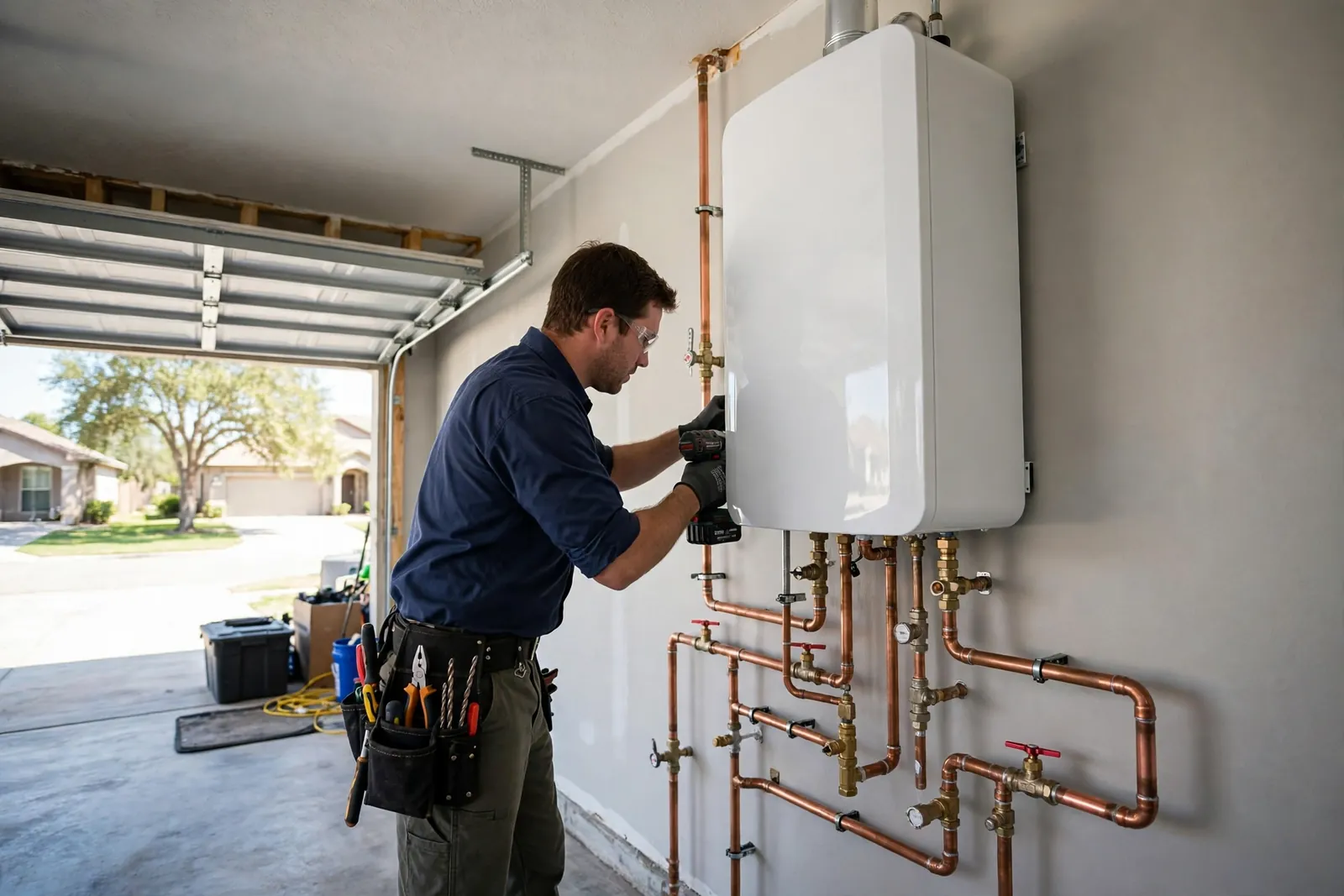
The failed part fitted — sensor, igniter, valve, fan or board — and the unit retested until the code stays gone.
How the work runs
Call with the code ready
The exact code from the display, and the make of the unit from the label.
Code recorded before reset
The code is written down, and what the unit does when a tap opens is watched.
Diagnosis by family
Ignition, overheat, venting or sensor — the checks follow the family the code names.
Supply, flow and scale checks
Gas or power, flow and temperature, inlet filter, heat exchanger — in order.
Repair
The failed part fitted — sensor, igniter, valve, fan or board — or a descale where scale is the cause.
Retest until the code stays gone
Hot water run at the taps, the unit watched through a full cycle, no code showing.
Tools and methods used
Error-code reading
The display code is read first, because it names the fault the unit detected and sets the order of the checks.
Flow and temperature meters
Flow rate and temperature rise are measured at the taps, so the diagnosis rests on numbers.
Manometer and electrical meter
Gas pressure at the unit under load; voltage, current and continuity on electric units.
Sensor testing
Sensors are tested against known readings, so a sensor fault is found rather than assumed.
Descaling pump and solution
A circulation pump runs descaling solution through the heat exchanger where scale is behind the code.
What to do when a code appears
Write the code down, exactly as it shows, and note the make of the unit from the label. Note what the unit does when a tap opens — fires, lights, dies, or stays silent. Check the simple things: cold water running normally, the breaker panel, the gas valve, whether other taps have hot water. Take a photo of the display and the label. Then call, with the code and the make ready — the answers decide what comes to the door.
Reset once, if the maker guidance allows it, and watch what happens. If the code clears and the unit heats normally, the fault may have been transient — a brief interruption in gas or power, or a one-time sensor reading. If the code returns, the fault is real and needs finding. Do not keep resetting: each reset clears the evidence, and a unit that keeps shutting off is protecting itself from damage.
Codes that mean stop and call now
Some codes mean the unit should not be run again until it is looked at. A gas smell with any code means leave the house and call from outside. A leak with any code means shut off the water and the gas or power where it is safe to do so. An overheat code that returns after a reset means the heat exchanger is running too hot, and running it again adds damage. A venting code means the exhaust path is wrong, and the unit is shutting down for safety. These are not codes to clear and hope — they are codes to call about.
A unit showing an error code that returns after every reset
A tankless unit that cannot heat, or heats unevenly, leaves the house without reliable hot water — and the cause is rarely visible from the outside.
A unit with the fault behind the code found, fixed, and the code gone for good
The diagnosis names the cause — scale, flow, gas, venting or a failed part — before any work starts, and the fix is tested at the taps.
Problems this service solves
- Ignition codes — the unit tries to light and cannot.
- Overheat codes — the heat exchanger runs too hot, usually from scale.
- Venting codes — the exhaust path is blocked, corroded or wrongly sized.
- Sensor codes — a reading the control board cannot trust.
- A code that returns after every reset, with the water still cold.
- A code that appears only on cold mornings, when demand peaks.
- A code after a freeze, tracing back to cold damage.
- A blank display — no code at all, and no heat.
Signs your tankless unit has an error-code fault
- The display shows a code that was not there before.
- The code returns after a reset, every time.
- The unit fires, then dies, then fires again in a short cycle.
- The code appears on cold mornings and clears later in the day.
- The code appeared after a freeze, a power cut, or gas work.
- The display is blank and the unit will not respond at all.
- The code changes from one reset to the next.
- The unit shows a code and leaks at the same time.
Other tankless water heater services
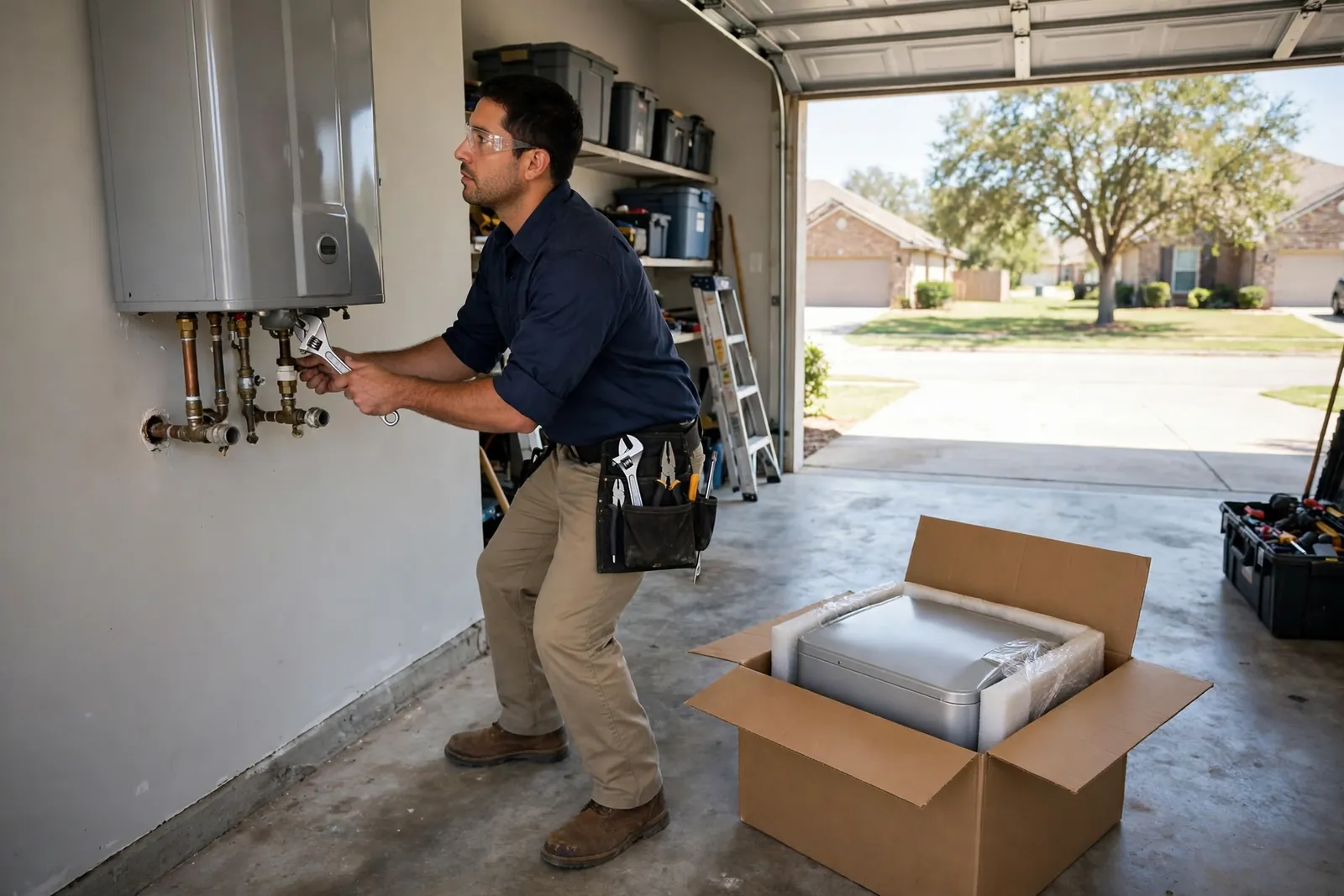
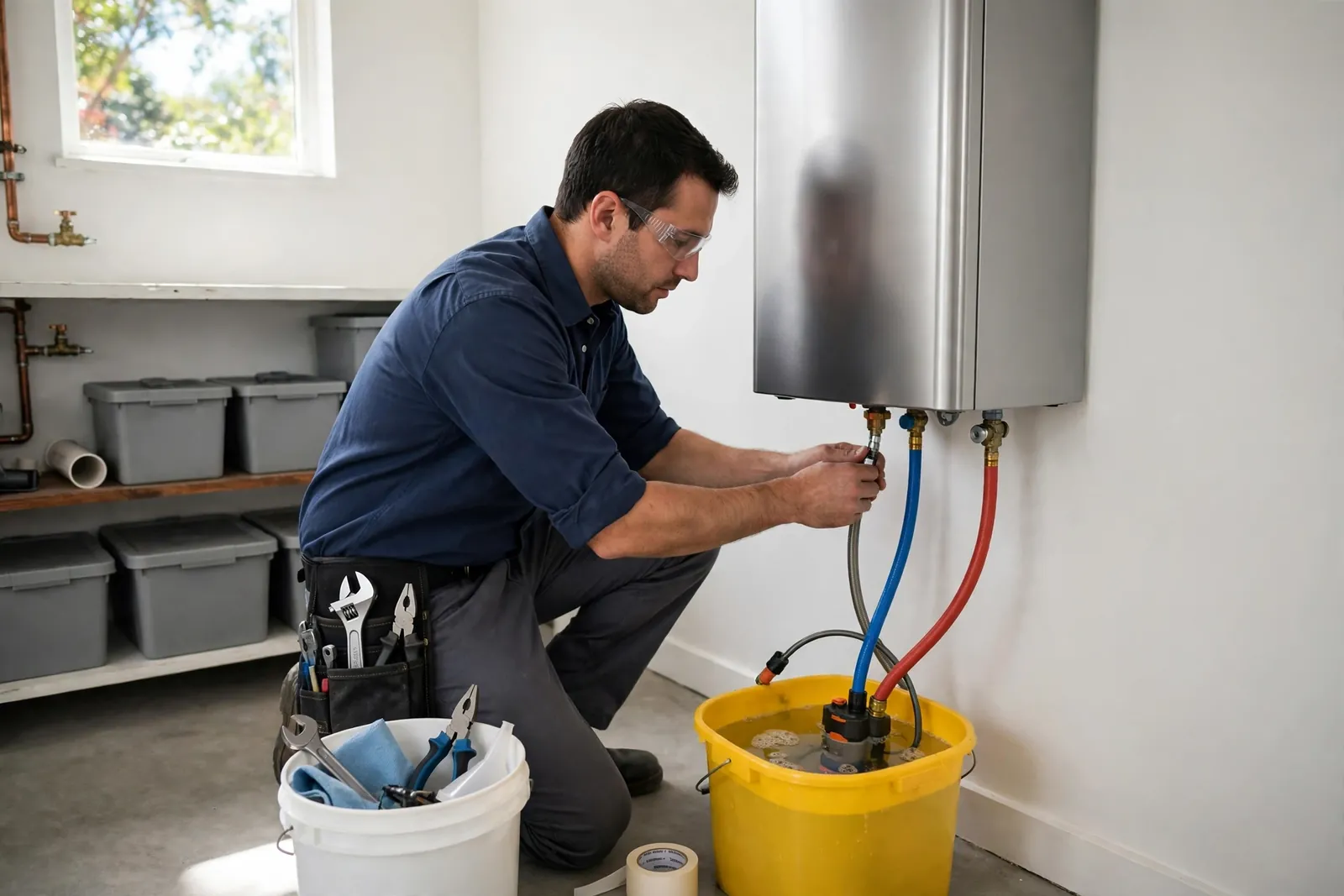
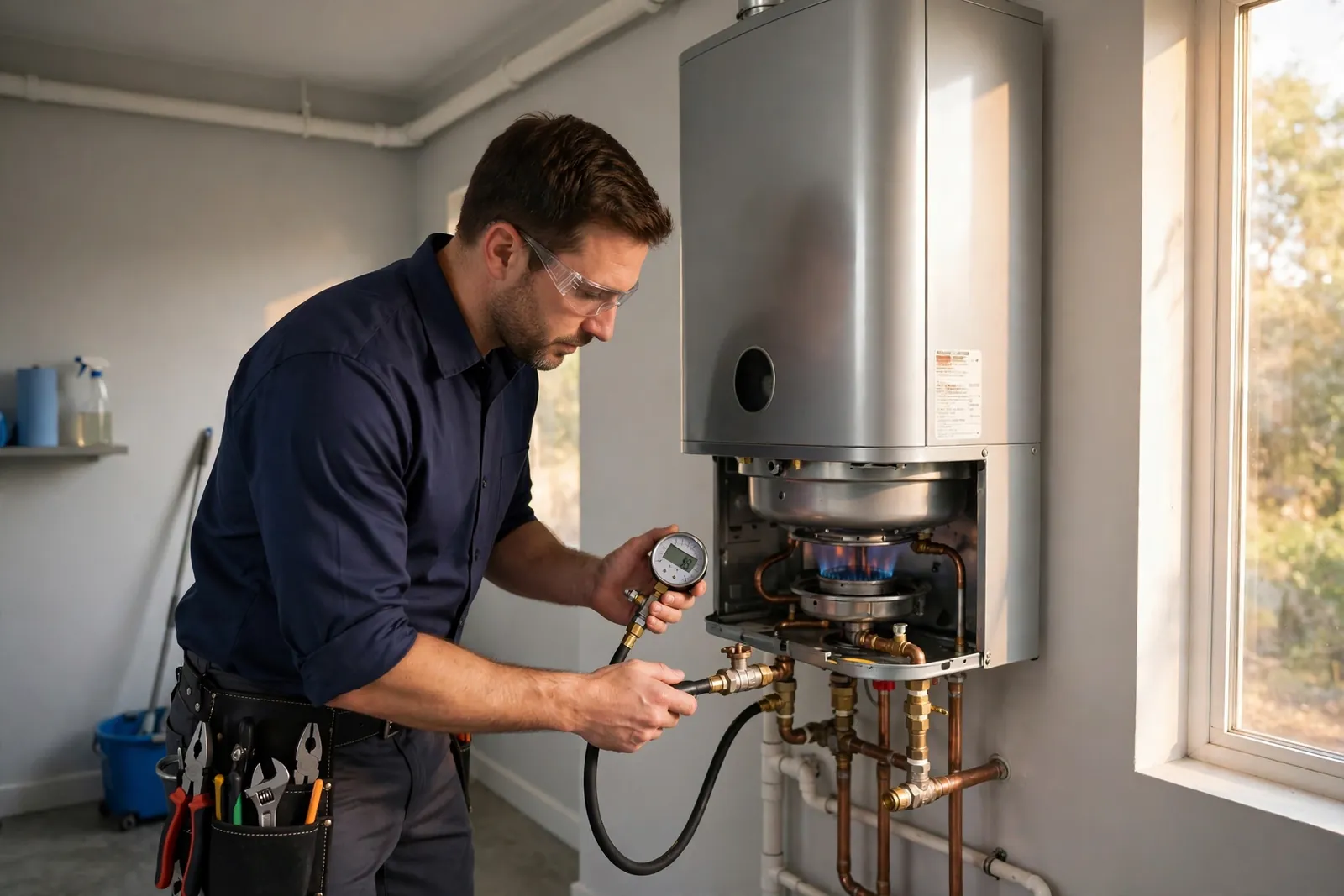
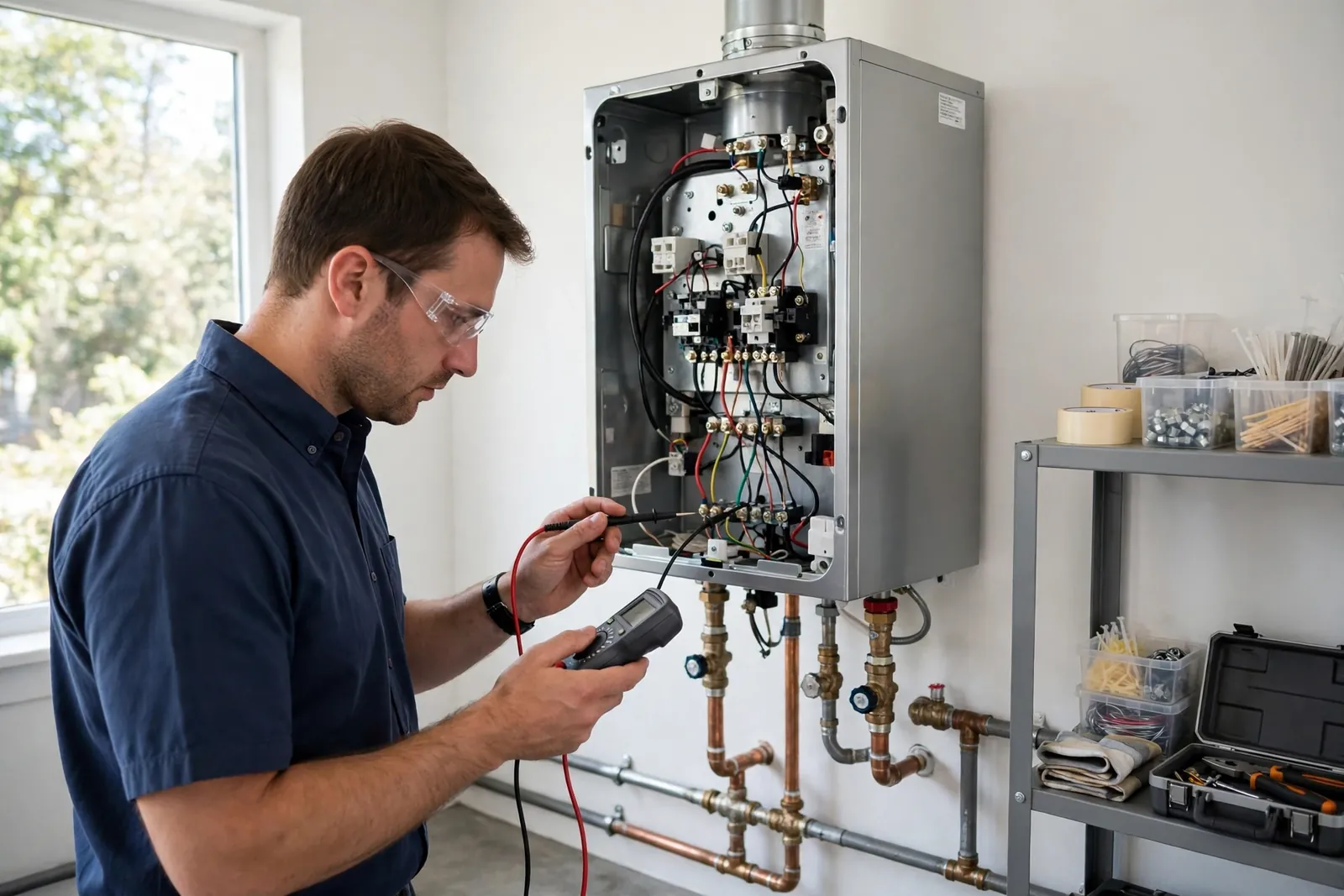
Related problems
Industries that use this service
Single-Family Homes · Rental Properties · Apartments and Condos · All industries →
Frequently asked questions
Questions people ask about tankless water heater error code repair, answered plainly.
An error code is the unit reporting what it detected — ignition failure, overheating, a venting fault, or a sensor reading out of range. Codes vary by maker, so the exact code and the make of the unit matter. Write the code down before you call, and do not keep resetting the unit if the code returns.
Write the code down first, then reset once. If the code returns, the unit is still detecting the same problem, and repeated resets mask a fault that is getting worse. The code and the make of the unit are what the visit needs.
Overheat codes, from hard-water scale insulating the heat exchanger until it runs too hot — usually on cold mornings when demand peaks. Ignition codes are next, from gas supply, igniters and fouled flame sensors. The code family decides what the visit covers.
Winter incoming water is much colder, so the unit must deliver a larger temperature rise at the same flow rate. A scaled heat exchanger that copes in summer trips its overheat protection in January, when the demand on it is highest. The pattern points to scale.
A blank display means the unit has lost power, or its control board has failed. Check the breaker panel and the power to the unit first. If power is reaching the unit and the display stays blank, the board is the likely fault.
Sometimes. An overheat code that returns after a flush can mean the heat exchanger is damaged beyond flushing. A leak code with water under the unit can mean a cracked heat exchanger. The diagnosis follows the code, and the recommendation follows from what it finds.
No. Codes vary by maker, and the same number can mean different things on different units. The exact code and the make of the unit are both needed — the label on the unit gives the make, and the display gives the code.
The unit is detecting different faults as it tries to run — or one fault is causing several sensors to read out of range. Write down every code that appears, in order, and call with the list. The sequence is often more informative than any single code.
Where scale is the cause, yes — a descale dissolves the mineral layer insulating the heat exchanger, and the overheat code clears. Where the cause is a failed part, a venting fault or a sensor, descaling will not clear it, and the diagnosis continues.
The exact code from the display, the make of the unit from the label, what the unit does when a tap opens, and whether the unit is leaking. A photo of the display and the label helps — the answers decide what comes to the door.
No hot water in your Sugar Land home?
Call Now to reach a local tankless water heater professional. Describe the unit, the symptoms, and any error code on the display.
Call now for tankless water heater help
Tap Call Now to reach a local tankless water heater professional. Tell them the make of the unit if you know it, the symptoms, and any error code on the display.
Hours: Mon–Fri 7:00 AM–10:00 PM ET · Sat 8:00 AM–10:00 PM ET · Sun 7:00 AM–9:00 PM ET
Before you call
- Note the error code on the display, if one shows.
- Check whether other taps have hot water, and whether cold water runs normally.
- If the unit is leaking, shut off its water and gas or power where it is safe to do so.
- Take a photo of the display and the label on the unit.
- Note when the problem started and what changed just before it.